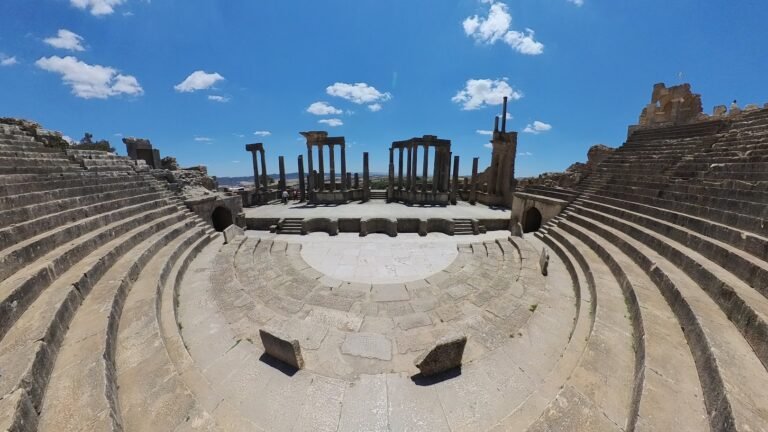
Tunis (the capital of Tunisia) was just one stop on our week long Tunisia adventure but makes for a great base if taking day trips elsewhere in the country, like Dougga or El Jem. It could also make for a pretty cool weekend trip by itself.
Tunis has been inhabited for nearly 3,000 years. The sheer number of civilisations that have shaped this city is incredible. They include the Phoenicians, Romans, Byzantines, Ottomans, Andalusian refugees, and French colonisers. Tunis is a true cultural melting pot and makes for an incredible place to visit, especially if you love history.
We arrived late in the evening and had the following day to explore, plus one other late afternoon following a day trip. It was just enough time to discover many of the main sites of the city.
However long you are able to spend, these are some of the sites and experiences you won’t want to miss!
Medina
The Medina of Tunis is the oldest part of the city, dating back to the 7th century, and it’s one of the busiest areas to explore. It’s a maze of narrow lanes filled with small shops, workshops, and historic buildings. Thankfully it’s small enough that if you do get lost, you can find your way again pretty quickly.
The souks sit right in the middle of it all and are organized by trade: from spices and perfumes to fabrics, jewellery, and handmade crafts. There’s some lovely stuff here, but don’t forget to haggle for those prices! Too bad we packed so light I couldn’t take much back with me.
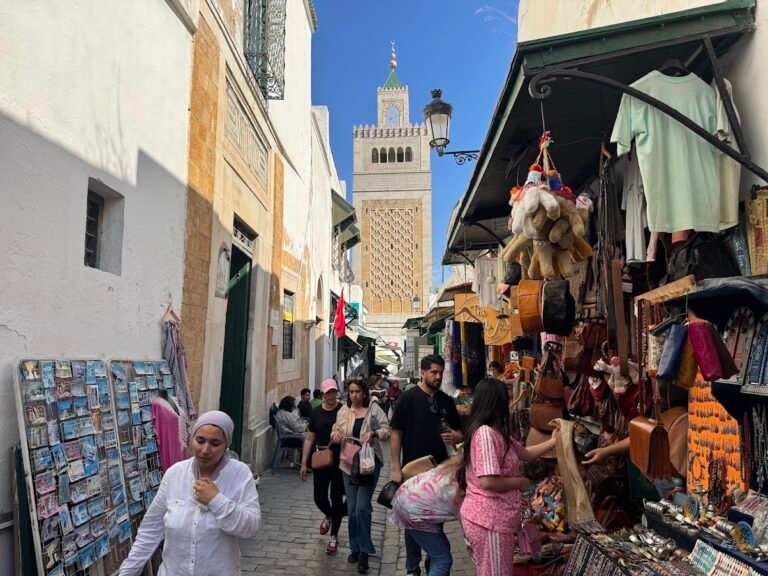
The Great Mosque (Zitouna Mosque)
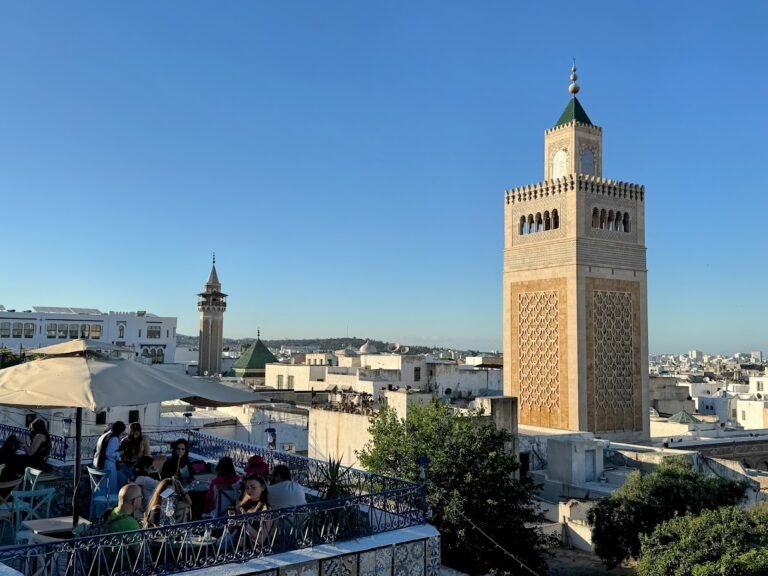
Dar Lasram
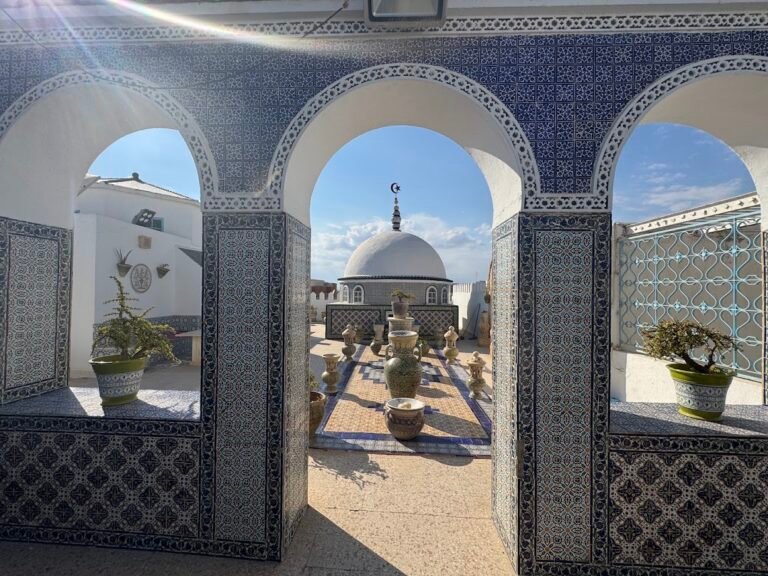
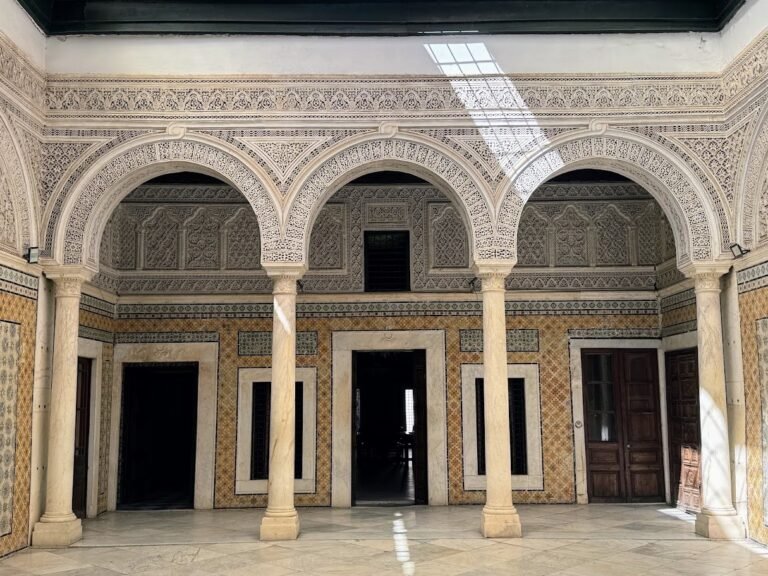
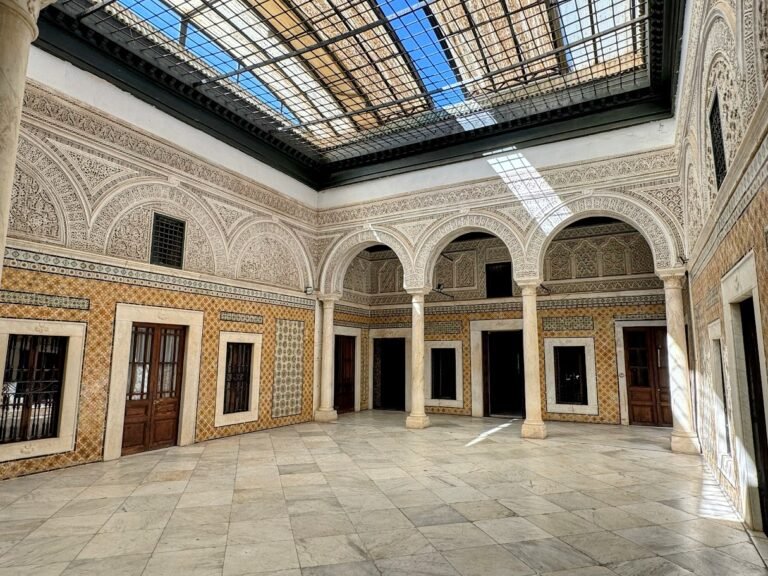
Dar Lasram is this beautifully restored 19th century mansion in the Medina, built for the wealthy Lasram family.
It was free to enter and has some incredible traditional Tunisian architecture, with tiled rooms, carved woodwork, and a beautiful central courtyard.
It would be very easy to miss this place, and we would not have found it without the use of our maps app! This was a short visit but one of the most beautiful places in the Medina!
Time to spend: 30 minutes
Rue du Pacha
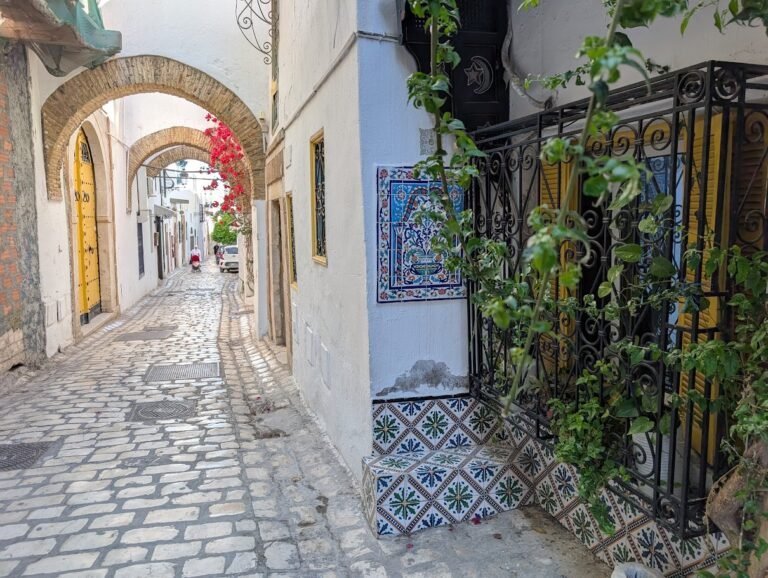
One of the prettiest streets in the Medina. Rue du Pacha is this long, quiet lane that is lined with traditional blue and white houses and old doorways. Bougainvillea lining the most incredible doorways. Honestly every doorway or archway leading into a side street was so picturesque!
It’s a nice change of pace from the busy souks to wander and see a more residential side of the old city.
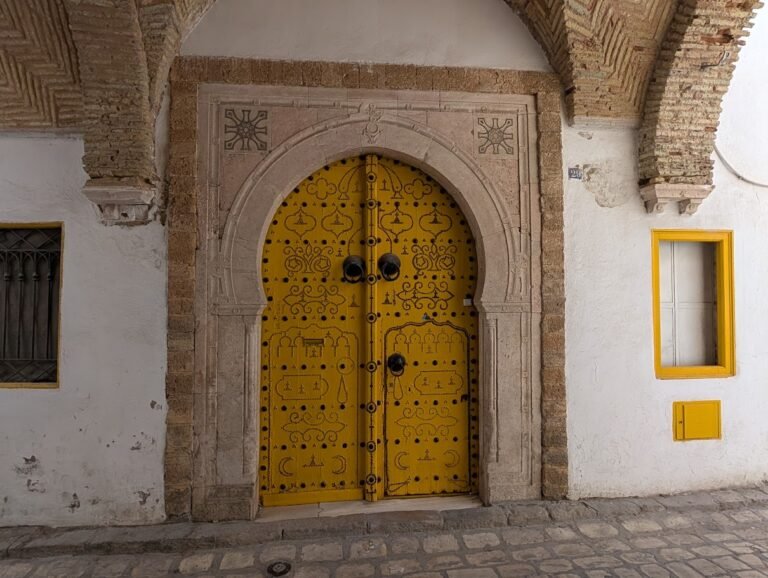
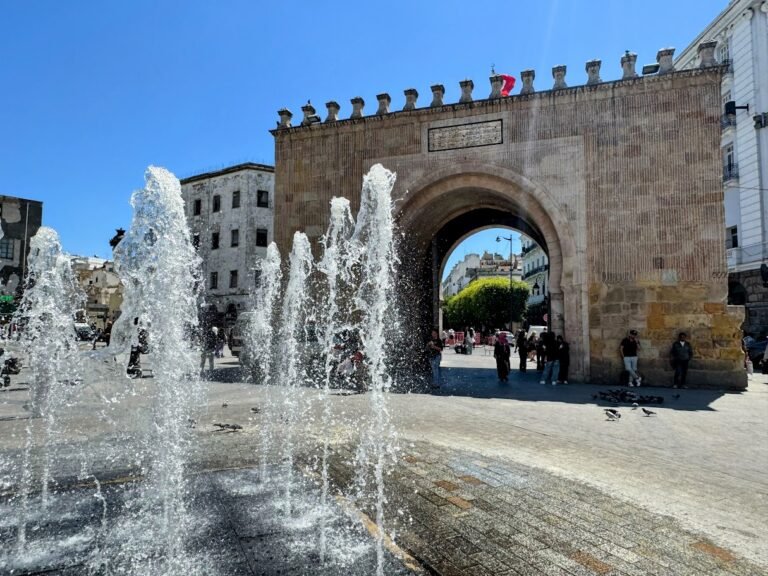
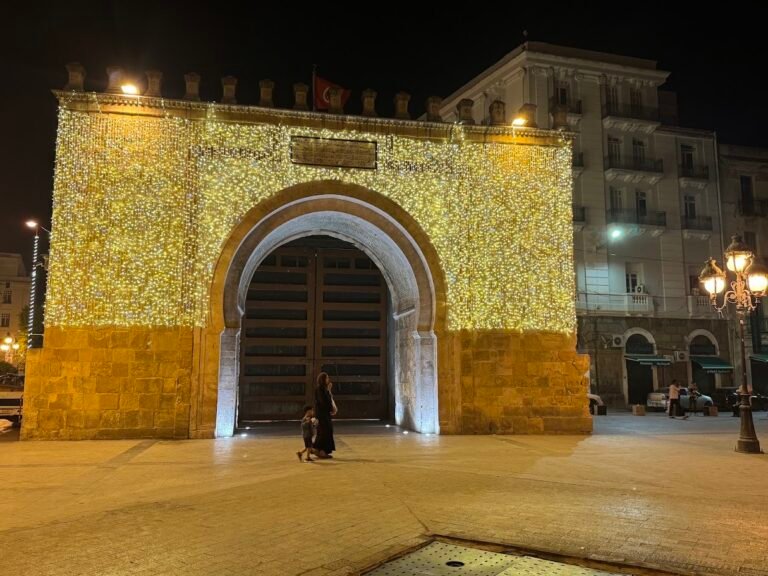
Bab El Bhar Gate
Bab El Bhar Gate is a freestanding stone archway located at the end of the Medina separating the Medina from the modern city. The name translates to Gate of the Sea but also has the nickname, ‘The French Gate’ as it was modelled to resemble the Parisian triumphal arches.
The surrounding area is quite pretty with a fountain in front and small shops and the beautiful Royal Victoria Hotel as well. Some nice photo opportunities too, particularly in the evening when the arch is illuminated.
I’d recommend making a quick stop here on your way to the Avenue Habib Bourguiba.
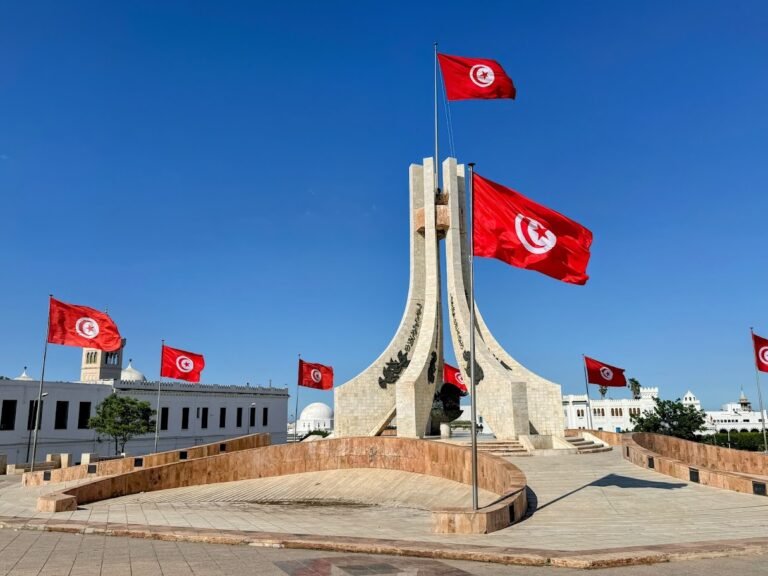
Kasbah Square
Kasbah Square is a large public square at the western end of the Medina. Surrounded by the Prime Minister’s office, City Hall and the Kasbah Mosque it’s the political and administrative epicentre of Tunisia. In the centre and surrounded by Tunisian flags is the massive National Monument. It was built to honour the martyrs of the country’s independence movement.
It’s definitely worth walking down to the square if only to get some some striking photos!
El Bardo Museum
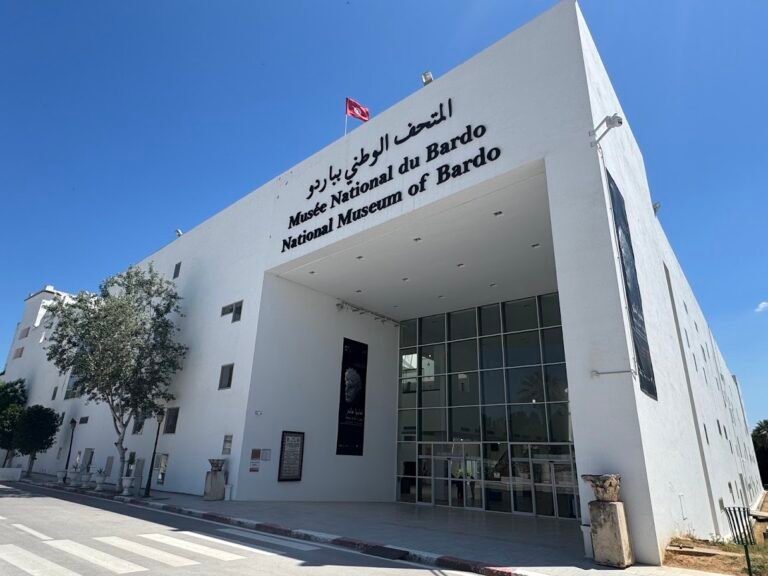
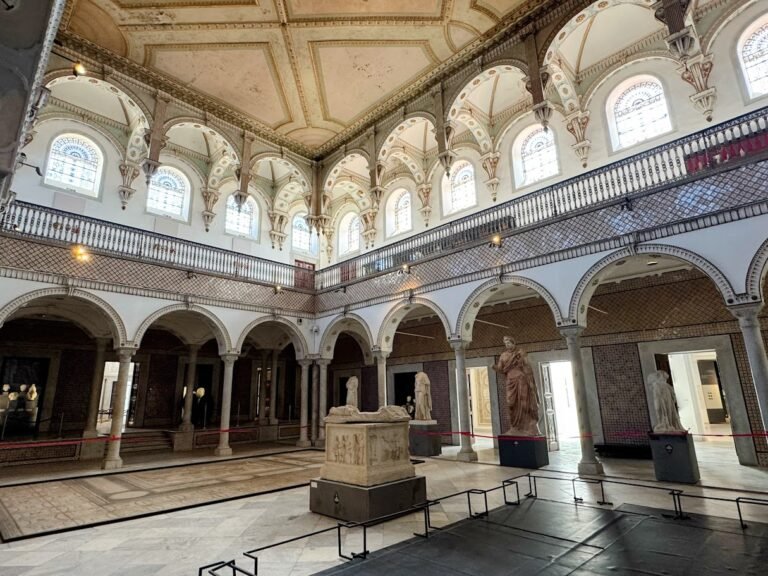
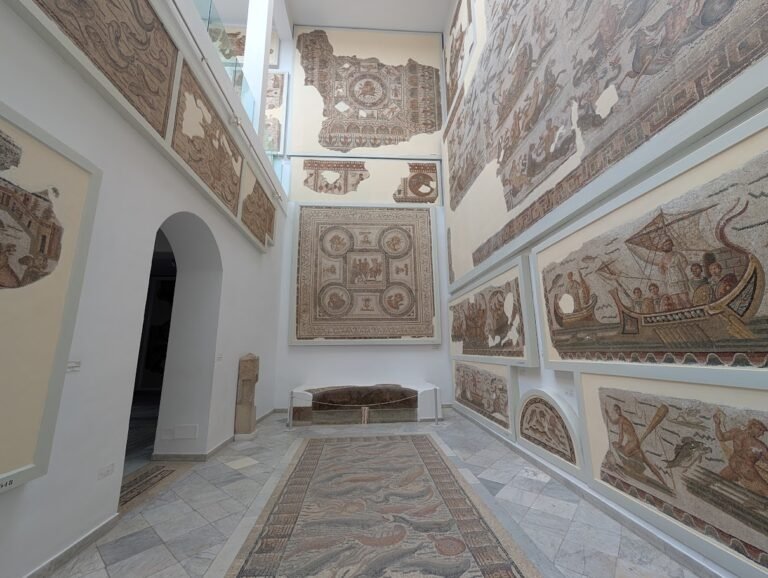
Known for its huge collection of Roman mosaics, El Bardo Museum is one of the most important museums in North Africa and is actually the 2nd largest museum in all of Africa. It’s about 4km outside the medina in the Le Bardo neighbourhood.
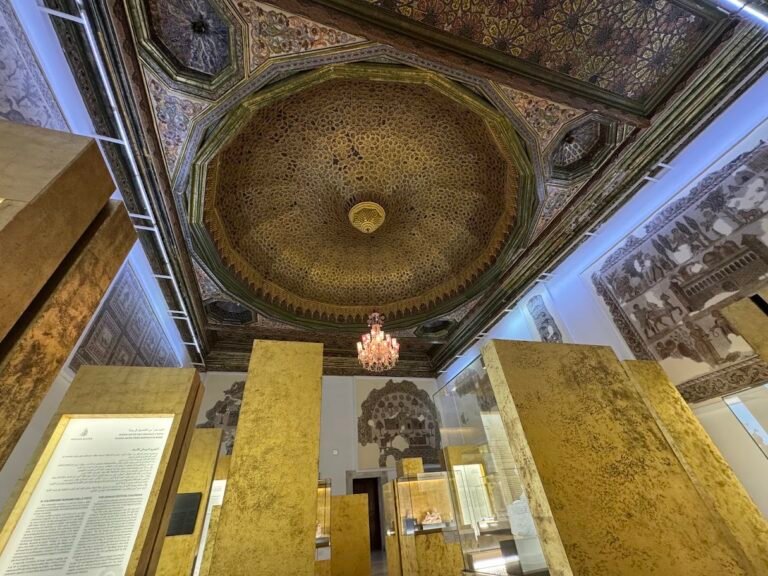
The museum is pretty spectacular. If the artifacts themselves aren’t amazing enough, the icing on the cake is the building itself. It’s an opulent, 19th-century residential quarters of the former Hussainid Palace.
I would suggest starting upstairs and working your way down. The rooms to explore are Sousse, Virgil, Carthage, Dougga and Oudna.
We spent about 2.5 hours here which I thought was plenty of time to walk about and see the majority of things. If you are a big museum lover and historian, I would budget for quite a bit more time.
Time to spend: 2-4 hours
Getting to the Bardo Museum
We took the metro from tram Place de Barcelone near the main central railway and paid 1.5TND each for a ticket. We went for this option as it proved tough to hail a taxi.
With some patience and some assistance from the locals, we managed to get on the right metro. It was only a 15 min ride to take us to the Bardo stop. Once there, cross the main streets to get to the Museum.
I’d recommend skipping the taxi apps, and taking the metro option, it’s quick, direct and very cheap.
Avenue Habib Bourguiba
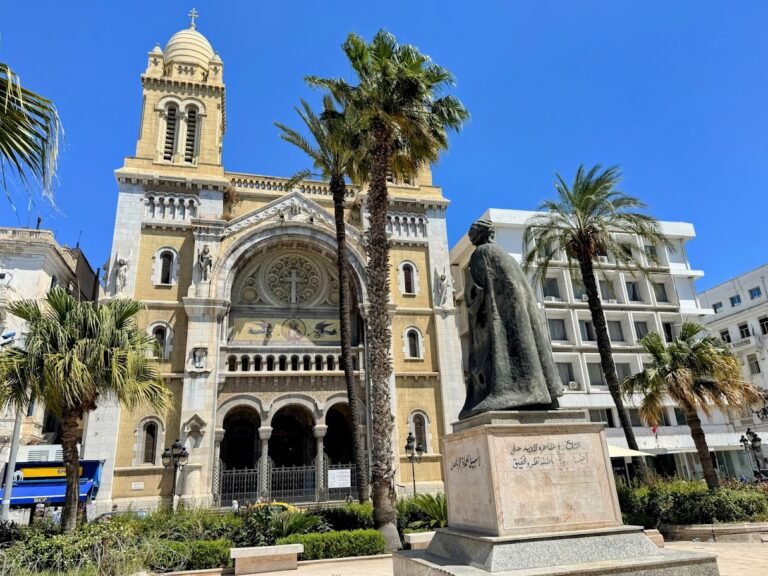
Avenue Habib Bourguiba is the main boulevard of Tunis and one of the best places to see the city’s French influence. It’s a grand, 60-metre-wide boulevard that was originally laid out during the French colonial era linking the ancient gates of the Medina directly to the Lake of Tunis. It’s lined with cafés, trees, park benches and old colonial era buildings, such as the stunning Cathedral of St. Vincent de Paul.
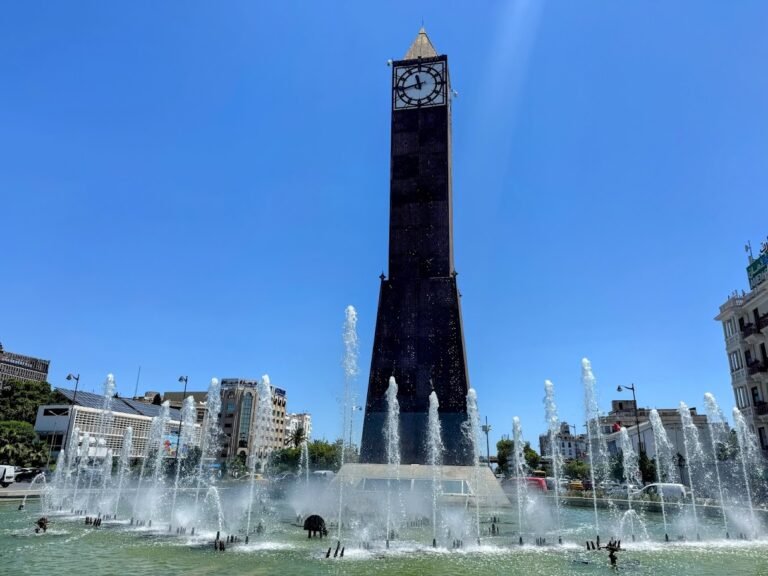
We enjoyed escaping the busy medina and walking down the avenue past the Municipal Theatre to the Tunis Clock Tower. The clock tower is this towering obelisk style monument surrounded by a lovely fountain.
Accommodation
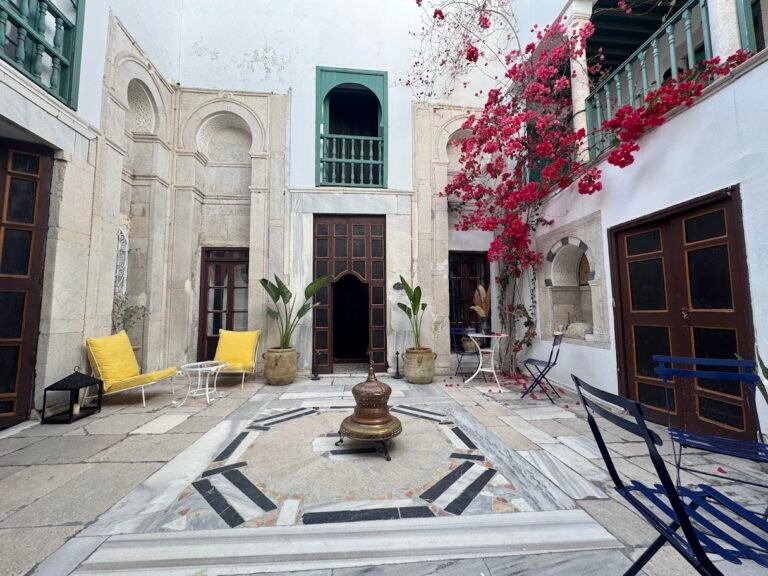
We opted for stays in the medina in what is called a “Dar” (Arabic for house). They are very similar to Riads’ in Morrocco.
These Dars are built around a central courtyard with intricately tile paved patios.
We stayed in two different ones in Tunis and loved them. The rooms were so unique and ornate and despite being in the middle of the medina also very quiet.
Dar Ben Gacem | Boutique Hotel – our favourite stay!! Right off Rue du Pacha, with a cool rooftop area and the best breakfasts!!
Dar Zyne La Medina – tucked away in the medina, this place was just such a hidden gem! Absolutely stunning inside and we had the coolest room!
Getting around
As we stayed in the medina we walked pretty much everywhere, with the exception of our trip to the Bardo Museum (where we took the Metro).
There is a an Uber style taxi app called Yessir, however as it’s so busy in the center of Tunis it can be difficult to find the right place to pick one up. We tried using the app to get to Carthage, but after waiting 20 mins our ride was declined (granted I think that was because it was so hard for cars to get through the medina).
If you do need a taxi, I’d recommend skipping the app and asking your hotel or accommodation arrange one for you. Taxis are quite cheap, we paid 3 TND (less than £1/€1) for a 4km ride.
Restaurant recommendations
Dar el Jeld – This is one of the highest rated restaurants in Tunis and now I know why. We had dinner at their rooftop restaurant and not only was the food incredible, the ambiance and views were amazing!
They actually have two restaurants around the corner from each other, on being more local focussed. It’s best to book ahead but we got very lucky and just walked in!
Steak Haus – had such amazing service!! We would not normally choose a steak restaurant as a pescatarian, but we were there during a major religious holiday and most restaurants were closed. Thankfully they were open and had some great shrimp options.
Cafe Lounge Ksar Ayed – Great rooftop views! Enjoyed some tea here and watched the sunset.
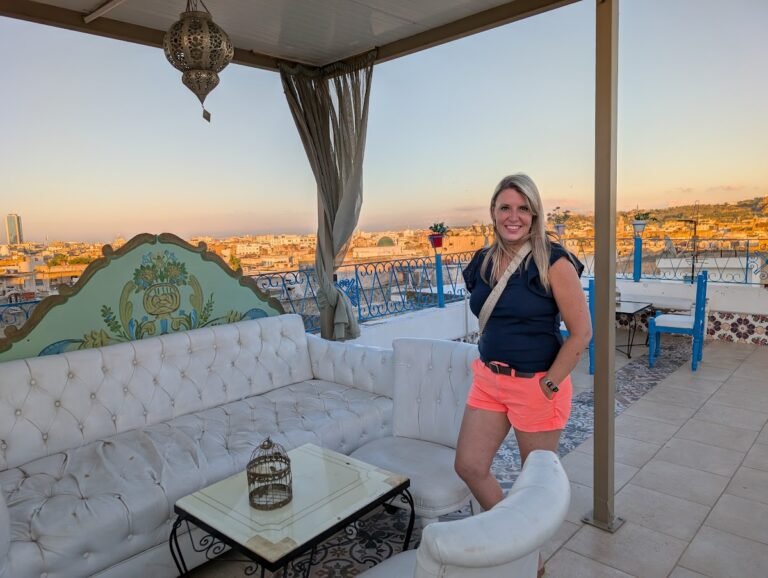
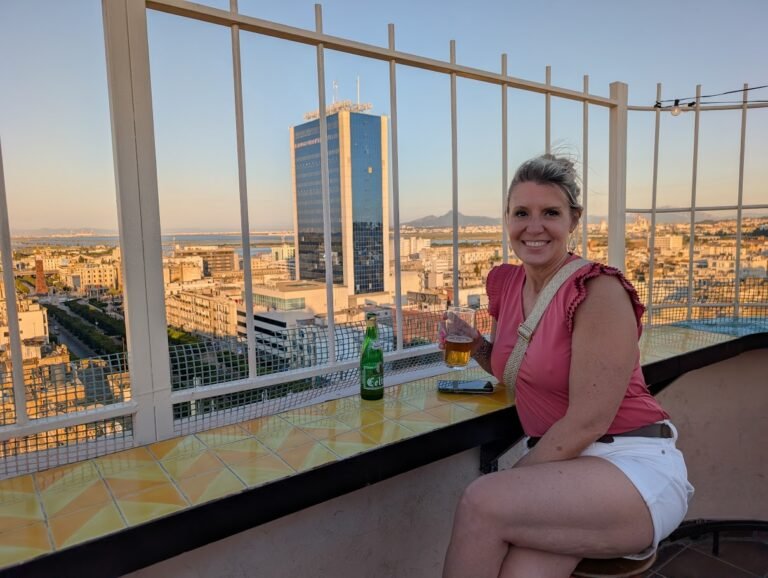
Bar Jamaica – you will only really find alcoholic drinks at hotels. This one is in El Hana International Hotel and the bonus is it’s on a rooftop.
Final Thoughts
Wherever you plan to visit in Tunisia, you will likely start your trip in Tunis.
I’d highly recommend taking at least a day to take in the sites, history, food and culture.