We chose to come to Rosenheim specifically for Herbstfest, which is Bavaria’s second largest folk festival, after Oktoberfest. We wanted to experience the famous Bavarian festival atmosphere but in a more local and laid-back setting.
While not a major tourist destination, Rosenheim has an inviting charm and a relaxed atmosphere, offering a more authentic side of Bavaria. It’s proximity to Munich, the Alps, the nearby Bavarian Sea, Herrenchiemsee (one of Ludwig II’s most extravagant palaces), and Innsbruck make it a perfect spot to explore further and enjoy day trips too.
We had two full days to explore Rosenheim, put on our dirndl and lederhosen, and of course check out the festival.
Herbstfest
Herbstfest is Rosenheim’s annual Bavarian folk festival, often thought of as a smaller, more local version of Munich’s Oktoberfest. This 12‑day celebration, held from late August to early September, dates back to 1861 and is known for being family‑friendly, less touristy, deeply local, and proudly traditional.
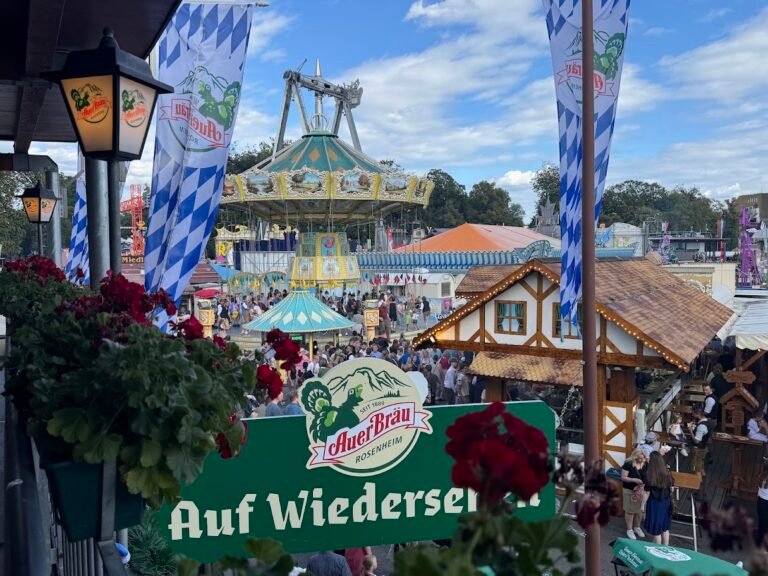
The festival takes place just outside the old town and features fairgrounds, rides, food stalls, and classic beer halls. The two main tents: Auerbräu Festzelt and Flötzinger Bräu Festzelt (Rosenheim’s hometown brewery) are the heart of the event. We visited both places and had a great time.
Inside the tents you’ll find hundreds of long bench tables, brass bands playing Bavarian folk music, and wait staff in traditional Dirndl’s or Lederhosen serving pretzels, roast chicken, Spätzle, and endless Maß beers (also known as steins).
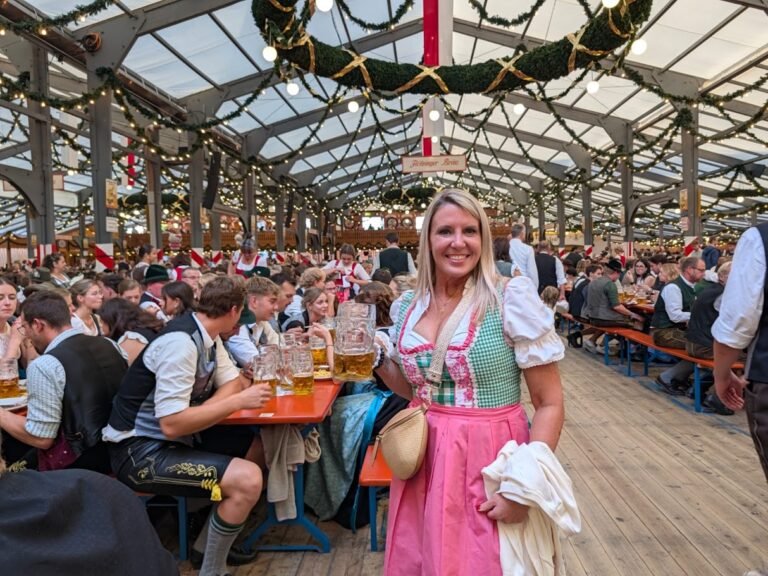
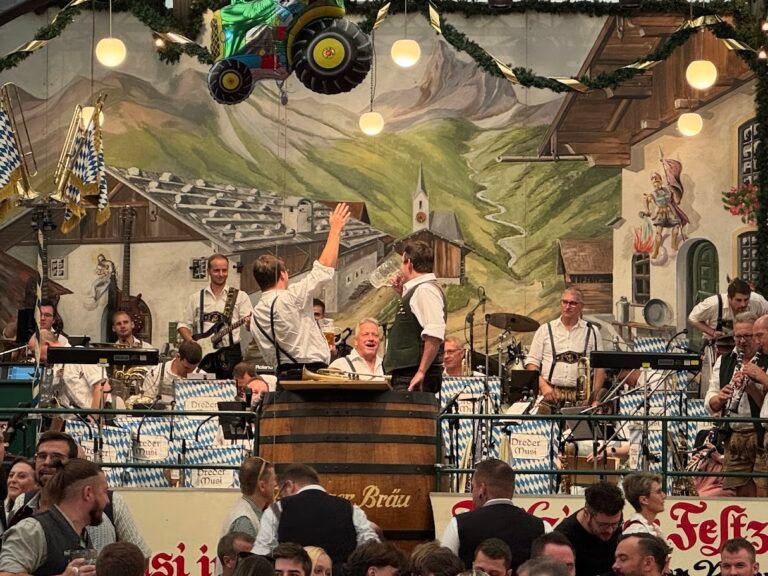
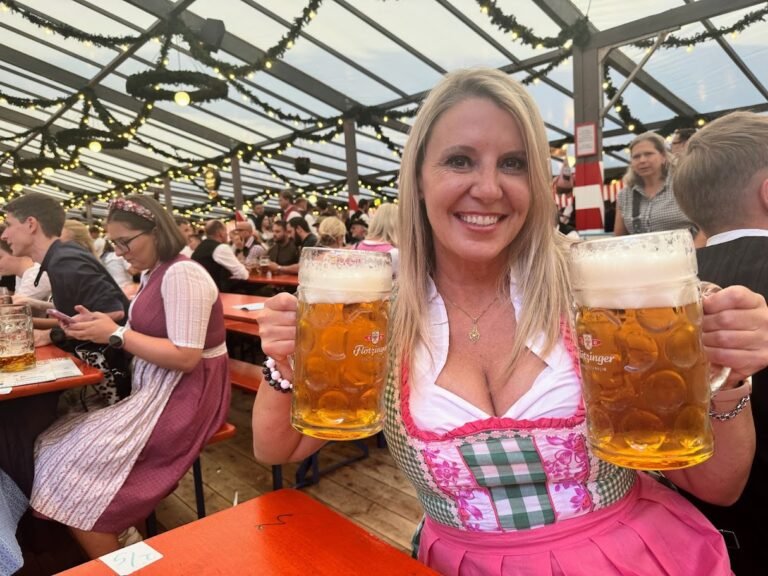
We had such a great time listening to traditional music, enjoying the food and beer, and simply watching the crowds. Seeing the large groups standing on their benches singing, cheersing each other with their large beers, and just having an amazing time was so much fun to watch. The whole atmosphere felt joyful, communal, and completely infectious.
Beer tents aside, there is much more to the festival with the fairground, rides, shops and games. We got fully immersed and tried a few of the rides and especially loved the giant ferris wheel. I will warn you ahead of time about Top Spin – one of those huge rides that is thrilling and scary at the same time. It was all fun until the end when for the last few seconds, you got spun round and round. I barely escaped this ride with my stomach intact. Drinking before getting on this ride is not advisable (hahahaha).
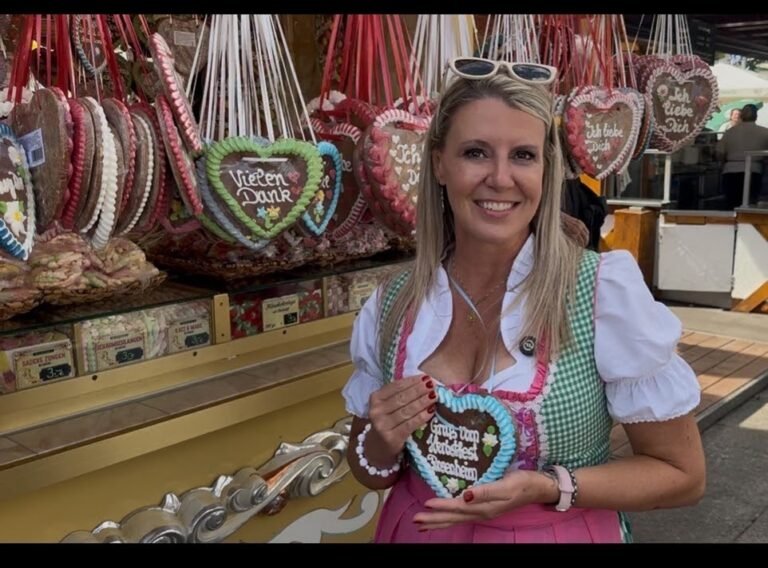
There are also several food stalls found throughout the grounds, as well as plenty of places to buy your very own Lebkuchenherzen. Lebkuchenherzen are one of the most beloved symbols of Bavarian Folkfests. They are sweet, decorative gingerbread hearts worn on ribbons, usually gifted to friends and family. The hearts include some message written on them in colorful icing, like “I Love You”, “Sweetheart”, or “Kiss” for example. I had always seen these but had never bought one. But as part of the immersing myself in Herbstfest, I had to get my very own!
Should I dress up?
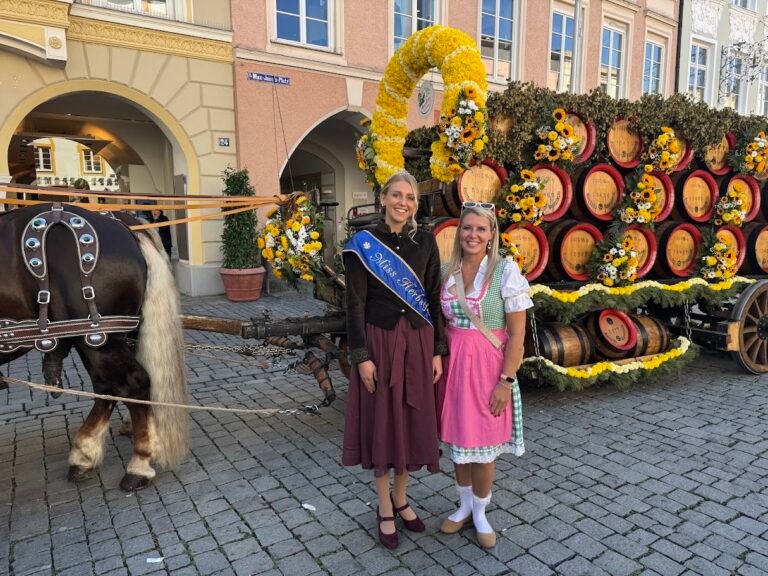
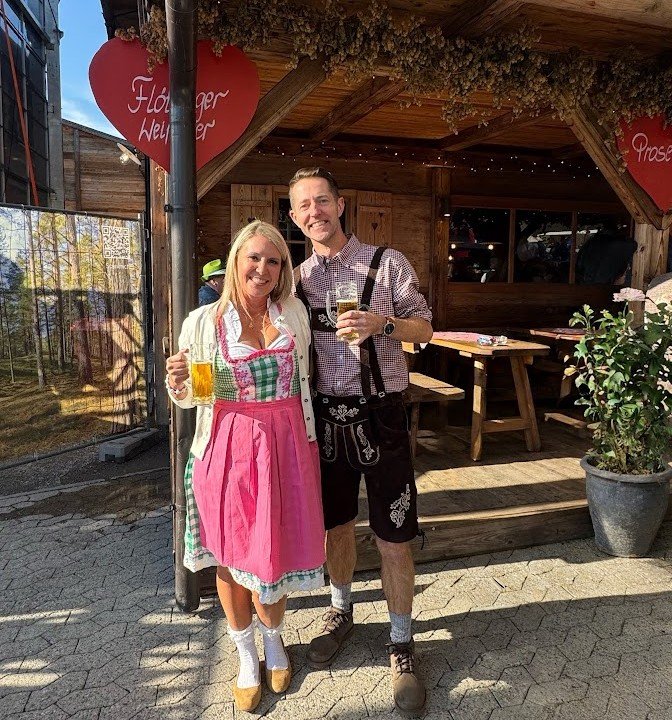
Yes definitely! I would say about 85% of people dress up in Dirndl’s for women and Lederhosen for men. Besides, getting all decked out in your Bavarian finest is part of the fun!!
A Dirndl is a three‑piece traditional outfit consisting of a bodice, blouse, skirt and an apron. They were designed to highlight the waist and the neckline! I think they are quite flattering and I loved seeing not only the different designs and colors, but girls and women of all ages wearing them.
For men you have the Lederhosen, which are leather trousers that are usually knee length or right above the knee, worn with suspenders and a decorative front flap called the Hosenlatz. They are traditionally embroidered with designs such as leaves, edelweiss or hunting motifs and are worn with a checkered or white shirt underneath. Okay maybe not always as flattering for the men but was so impressive to see how many men were embracing the look!
Do I need to book Or Reserve a table?
Entry is free, and during the day it’s easy to find a seat. After 6pm, the atmosphere shifts: most tables are reserved for large groups; the tents fill up, and things get more lively.
If you’re a big group (6+), you’ll need to reserve a table in advance but note reservations can only be made by phone or in person at the festival offices (no online booking). Couples or small groups can usually squeeze in by politely asking a table if they have space.
So is Herbstfest better than Oktoberfest?
I’d been to Oktoberfest in Munich years ago and had an incredible time, but after experiencing both festivals, I’ve realized that Herbstfest now has my heart. There’s something wonderfully local and welcoming about it. It has a family‑friendly atmosphere and a sense that the whole town has shown up in their Dirndls and Lederhosen ready to celebrate together. It felt less like a massive event and more like being invited into a community tradition, and that’s what made it unforgettable.
The Sites of Rosenheim
Rosenheim isn’t just about Herbstfest though, it’s a beautiful city that’s well worth exploring. Here are some of the highlights.
Max-Josefs-Platz
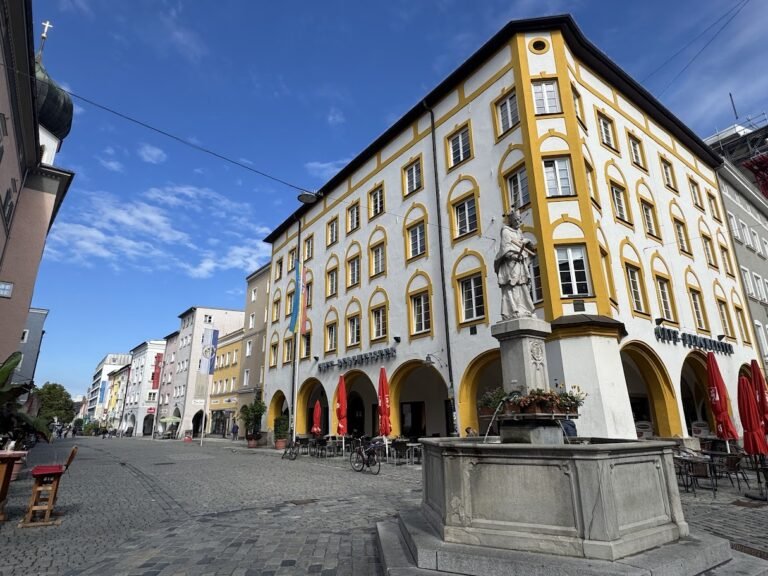
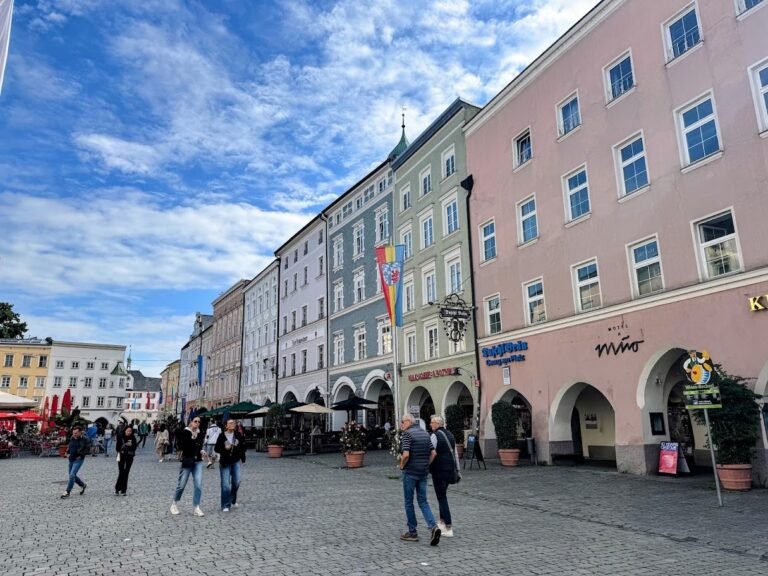
In the historic heart of the city is Max-Josefs-Platz. The square was renamed in honor of King Maximilian Joseph in the 19th century and is surrounded by colorful buildings and traditional Bavarian architecture. You will find beer houses, cafes and restaurants lining the square. A great place to sit outside and enjoy the local buzz.
Mittertor and the Municipal Museum
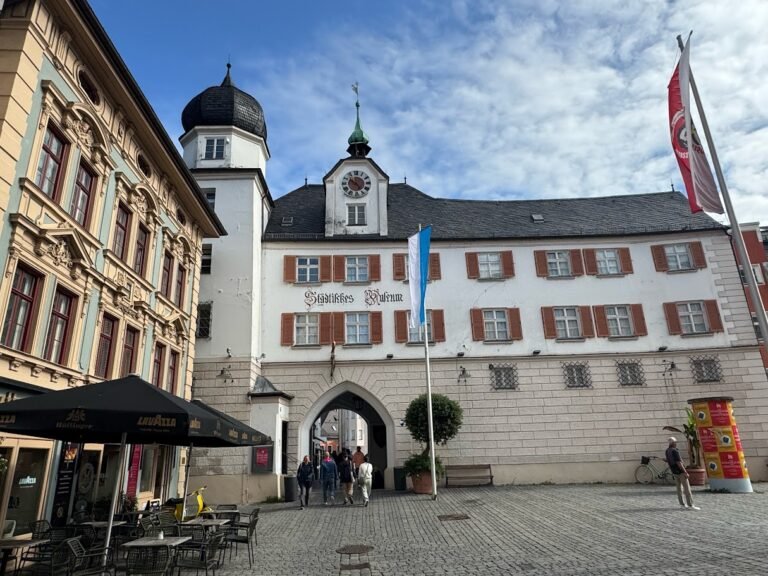
The Mittertor is one of Rosenheim’s oldest landmarks and the only remaining medieval gate in the city, that dates back to the 14th century. Today, it houses the Municipal Museum, that showcases Rosenheim’s history, from its medieval beginnings to its development as an important trading town. While we didn’t check out the museum, there were some really lovely cafes just in front that provided a great spot for some coffee and people watching.
Ludwigsplatz
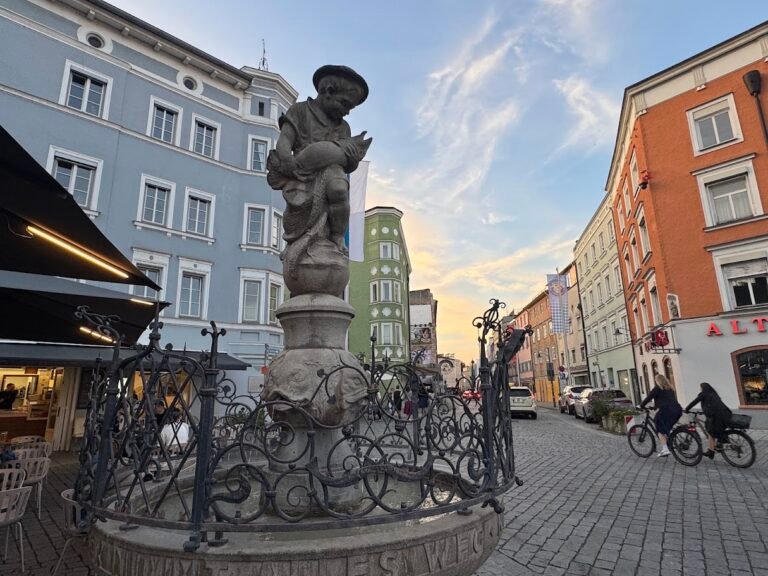
Just past the Mittertor is Ludwigsplatz , another historic square in the heart of Rosenheim’s old town. It was once part of the city’s Outer Market, where several smaller markets were held, including a fish market. It’s lively, modern, and a bit more everyday local compared to the historic Max‑Josefs‑Platz.
St. Nikolaus Church
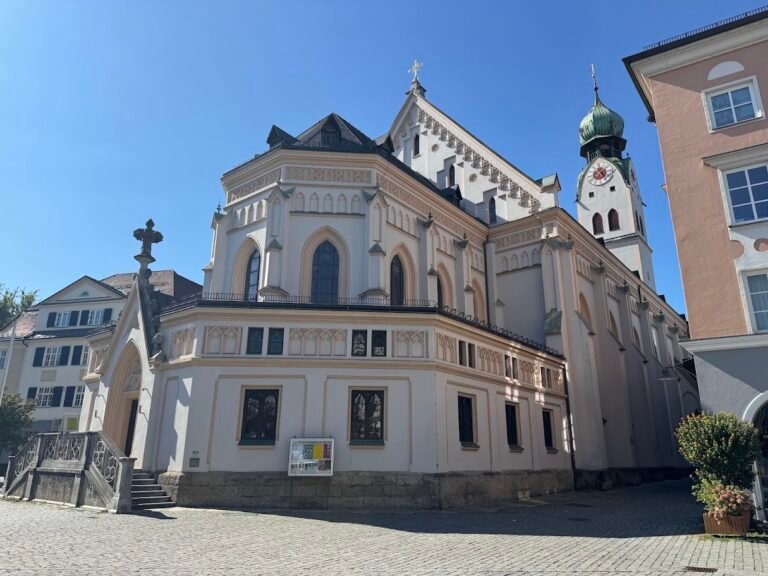
Found in Ludwigsplatz, and pretty hard to miss is one of Rosenheim’s most recognizable landmarks, St. Nikolaus Church. With its distinctive onion-domed tower, a classic feature of Bavarian architecture, it has become one of the city’s defining symbols.
Inside, the church is beautifully decorated in the Baroque and Rococo styles, with ornate details and colorful ceiling frescoes. You will also find the painting of the Virgin Mercy, which is the oldest work of art in the church and dates back to 1514.
The church tower is said to provide a great viewpoint over Rosenheim when access is available. Visits to the tower are generally limited to specific opening times or guided tours, which we missed by not checking ahead. Currently these are every Saturday at 10:45, but I would advise checking the website before going.
Salingarten
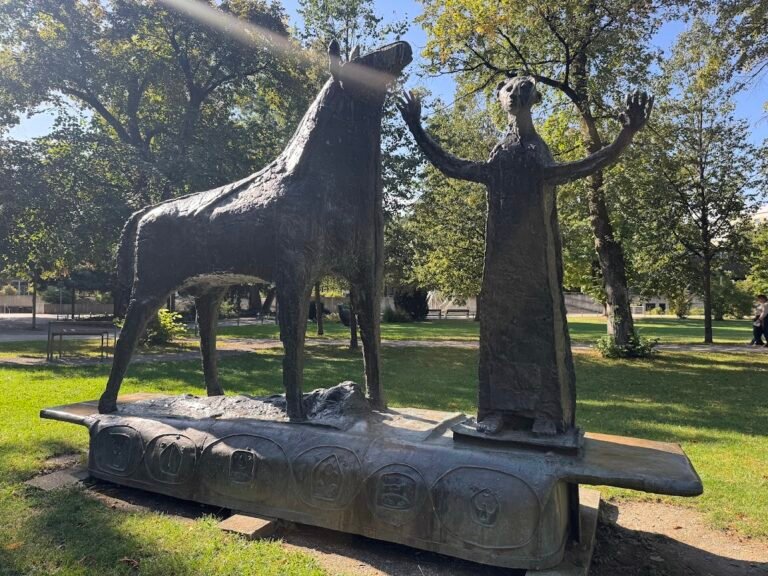
Just south of the old town is Salingarten. The small garden is located on the site of the city’s former saltworks, which operated here for around 150 years. At the back of the garden in front of the Stadtmuseum is a Waterwheel, symbolic of the cities’ ties to the Salt industry. The park itself has been transformed into a sculpture garden, featuring works by artists from Rosenheim and the surrounding region.
Riedergarten
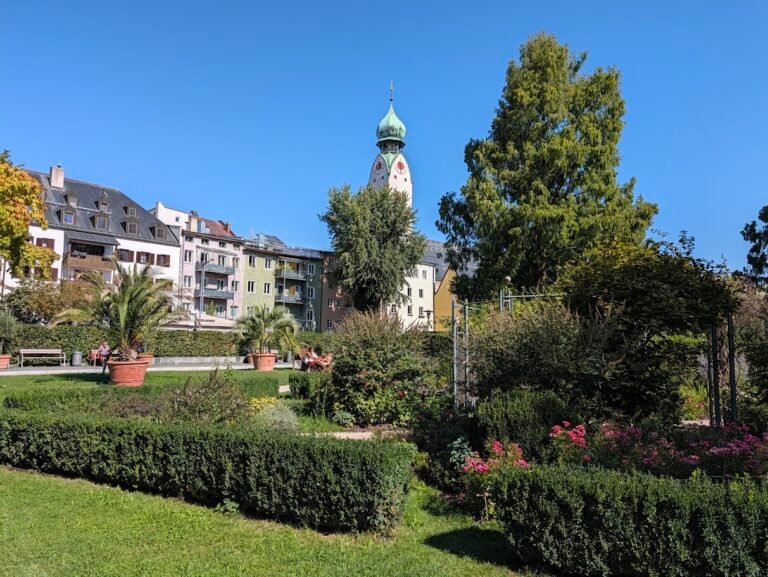
Riedergarten is another beautiful little park just outside the centre, full of flowers and meticulously landscaped greenery. It’s a peaceful contrast to the busy old town and a perfect spot for a quiet walk. We stumbled across it on our way to the Lokschuppen and the Brine Pump House and ended up finding some great photo spots especially where the garden frames the onion dome of St. Nikolaus in the background.
Lokschuppen
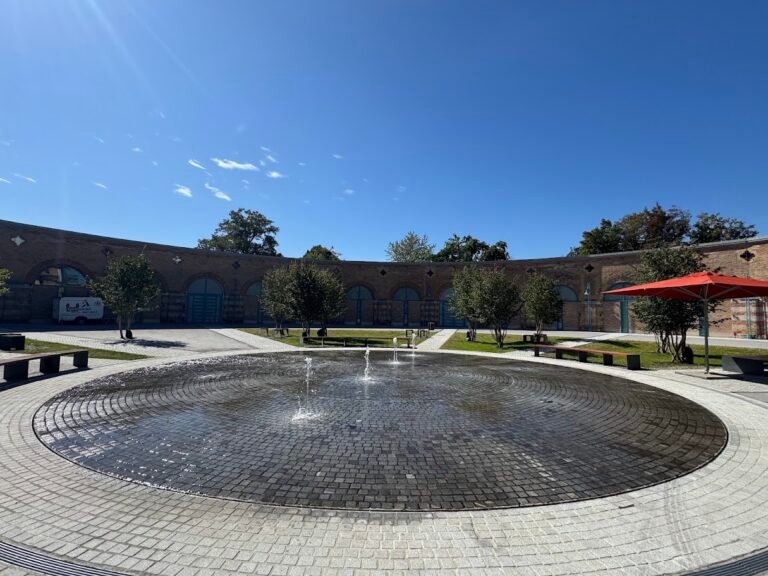
The Lokschuppen is a former locomotive shed that dates back to 1858, when it was part of Rosenheim’s first railway station. This historic building has been transformed into one of the city’s main exhibition spaces, with changing exhibitions throughout the year. During our visit there was an exhibition about Ancient Rome. There is a cool water fountain out front, which seemed to be a favorite spot for small kids to play in, as well as a lovely small cafe.
Brine Pump House
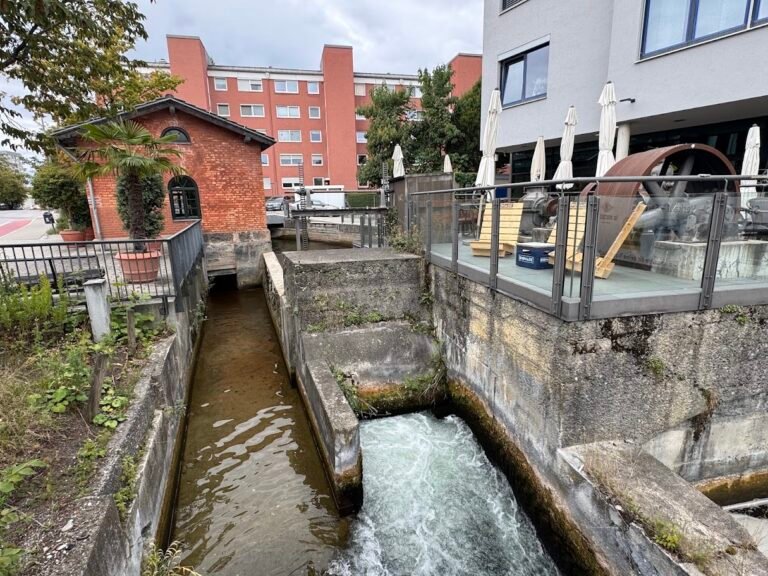
A short walk behind the Lokschuppen brings you to a small, modest‑looking building that’s actually tied to one of the most important industries in Rosenheim’s history – salt. For centuries, brine from the nearby Alpine region was transported through Rosenheim, fueling trade and shaping the growth of the city.
The Brine Pump House is one of only two surviving buildings from Rosenheim’s former saltworks. It once used a waterwheel and piston mechanism to move brine into elevated reservoirs — an ingenious bit of early industrial engineering. Today, part of that piston system has been incorporated into the outdoor seating area of the adjacent bar. It’s a surprisingly cool spot to enjoy a local beer while sitting beside the machinery that helped build Rosenheim into the town it is today.
Mangfallpark
About a 10-minute walk from town is Mangfallpark, a beautiful green space along the Mangfall River. The park was created for the 2010 Bavarian State Garden Show, transforming the former industrial riverside into a place for walking, relaxing and enjoying the water. Today, it’s also home to the popular Rosenheim Summer Festival, which takes place here every summer. Had we had another day or brought our running stuff, this would be an incredible place to go for a run.
Innspitz
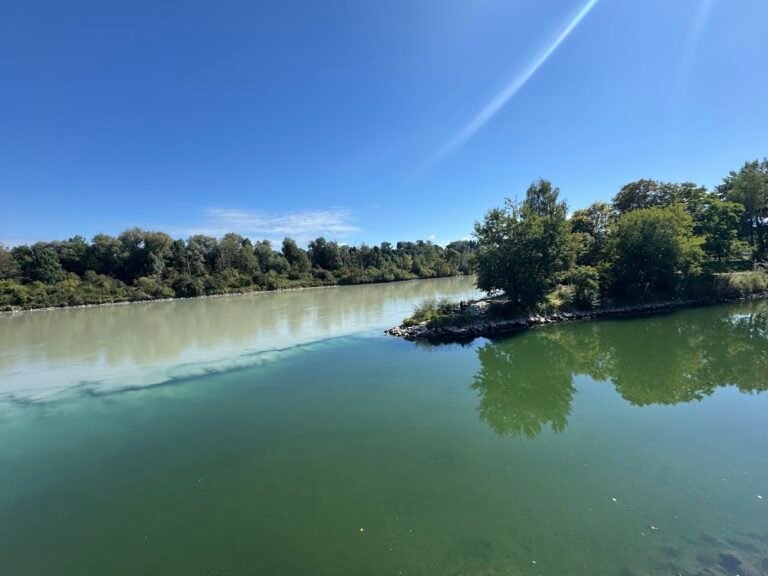
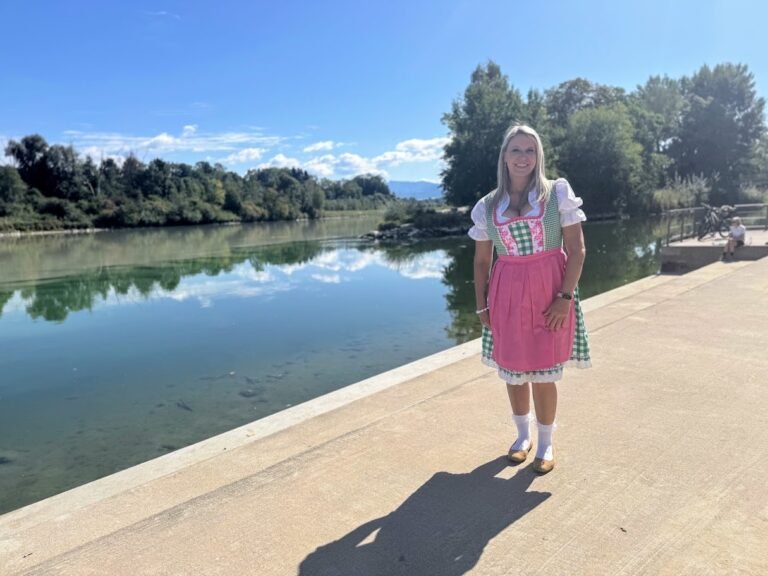
As we walked along the park, we reached one of the most scenic spots in Rosenheim. The Innspitz is where the Mangfall meets the River Inn, and it’s genuinely beautiful with two clearly different‑colored waters merging in front of you. An elevated walkway extends out over the rivers, giving you a perfect vantage point to watch the colors blend. We thought it was the ideal place to pause for lunch and take in the view.
Restaurants and Bars
I’m Irish was such a great find. We stopped her because of the lovely elevated outdoor terrace. We had no idea about the menu but were pleasantly suprised with the various vegan/vegetarian burger options. Honestly might have been one of the best veggie burgers I’ve ever had!
Zum Augustiner Rosenheim is a lovely spot with both outdoor seating and an inside restaurant, found in Max-Josef-Platz. Traditional Bavarian food with some veggie options as well. You can’t come to Bavaria and not have Schnitzel and spätzle, and thankfully they had vegetarian options too. Plus, I’m a big fan of the Augustiner Hells! A fun spot for traditional food.
Wrap Up
Two days in Rosenheim was just the right amount of time. We were able to see the main sights from St. Nikolaus Church and the Mittertor to the Innspitz and still spend long stretches at Herbstfest without feeling rushed. The town offered that quintessential Bavarian atmosphere while still feeling genuinely local. It was enough time to get a real sense of Rosenheim and enjoy Herbstfest the way locals do.