Belgium’s 2nd largest city, Antwerp, makes for a perfect weekend getaway. It’s blessed with ornate medieval guild houses, striking modern museums, cute little passageways opening into lively markets, and some of Europe’s most fashionable boutiques. It was deemed to have powered Europe’s Golden Age, and was one of the most influential cities for the arts.
We took the Eurostar over in December to explore its history and culture, and of course to enjoy the Christmas markets!
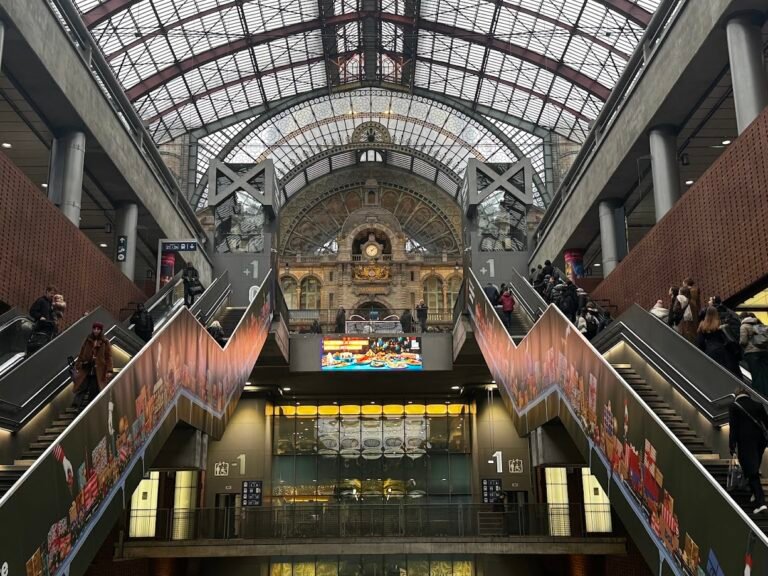
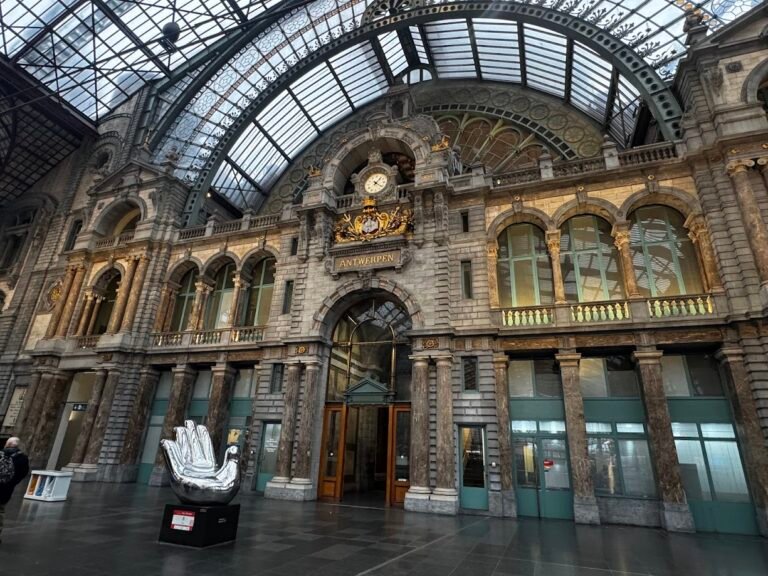
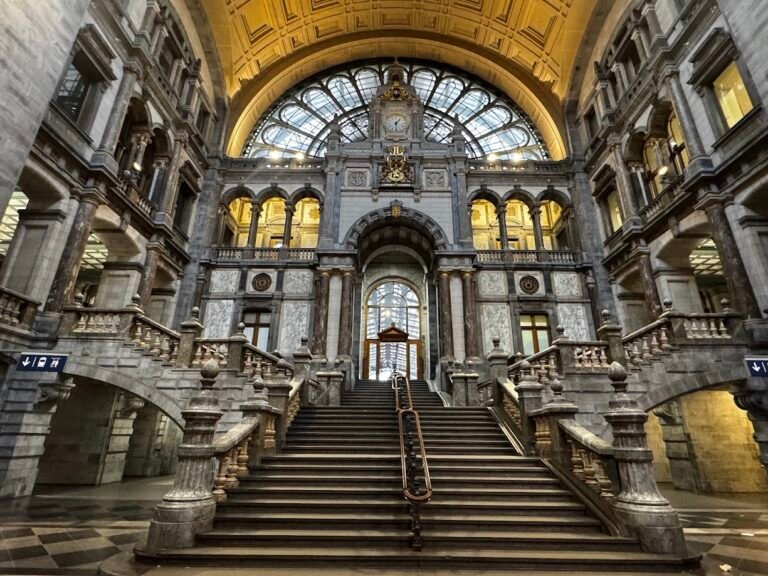
Antwerp Central Station
Nicknamed the Railway Cathedral, Antwerp Central Station feels less like a train station and more like a palace dedicated to travel. Completed in 1905, it was built at a time when Antwerp wanted to showcase it’s power and prestige to the world. As you step off the train and ride the escalator upward, it’s like walking onto a theatrical set. A vast iron-and-glass vault soars overhead, flooding the hall with daylight and drawing your eyes toward a beautiful clock. Passing under the archway into the grand concourse, the space impresses with its polished stone, sweeping arches, and large domed roof. No detail was spared in constructing this Belgian masterpiece!
Take your time to look around —rushing through on arrival would really be a shame!
Where we stayed
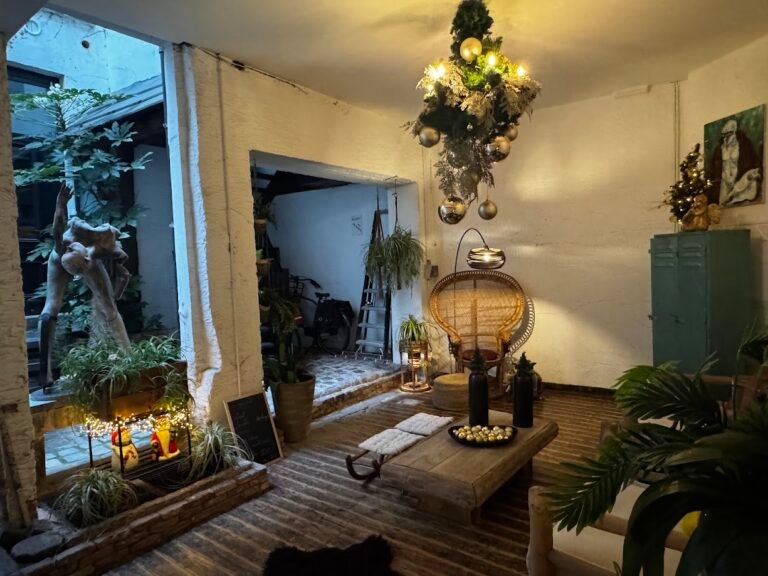
If only staying for 2 days like us, I’d recommend trying to stay somewhere central. We were able to walk to our place from the station and be right next to all the major sites in the old town. It really meant we could maximise the short time we had on both days.
We found a lovely place on airbnb that I’d highly recommend, beautifully decorated, comfy, quiet, and right in the heart of the city.
Grote Markt
Standing in the middle of Antwerp’s old town, Grote Markt is one of the city’s most impressive and probably most photographed spots. It’s been the heart of the city’s social and commercial life for centuries. All around the square, the beautifully restored guild houses provide a glimpse into Antwerp’s trading heyday, and the City Hall, built in 1565, is a stunning Renaissance building that was considered remarkably modern at the time.
The ground floor of City Hall is usually open to the public, but access to the grand historic rooms is only via guided tours. These guided tours must be booked in advance and can be done through the Visit Antwerpen website. Sadly no time for this on our stay though!
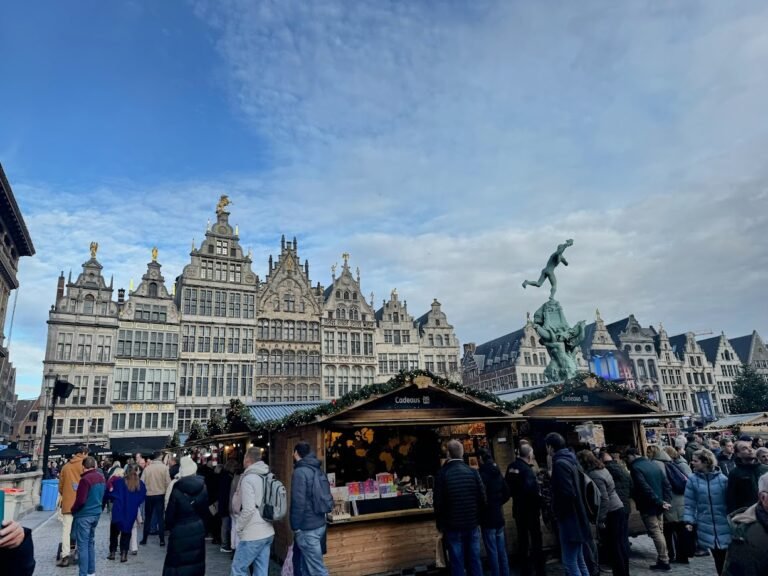
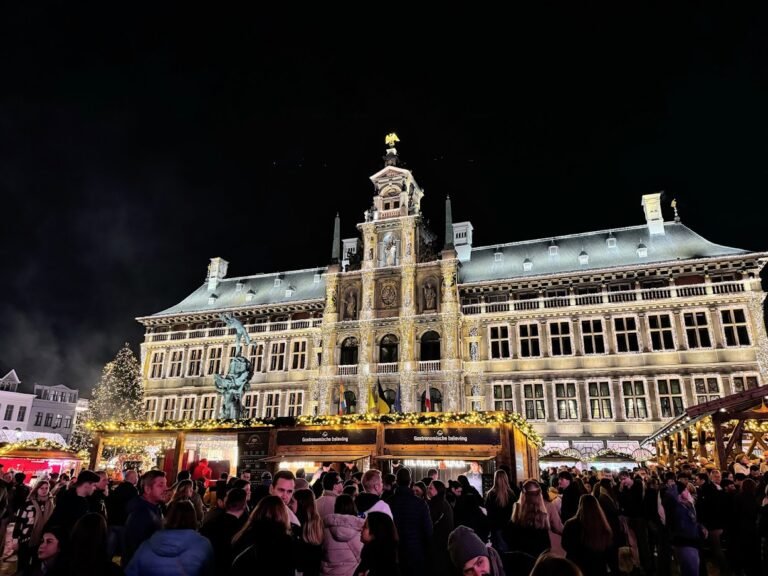
The Christmas market at Grote Markt!
The square is always buzzing with cafés and restaurants, and when we visited in December, the Christmas market added an extra festive touch. Sipping mulled wine, listening to holiday tunes, and soaking up all the incredible history around us made it a truly unforgettable experience. The square is really beautiful lit up too.
Tip: Grote Markt is Antwerp’s busiest christmas market, but explore the old city and you’ll find a few smaller squares with some very lively markets too!
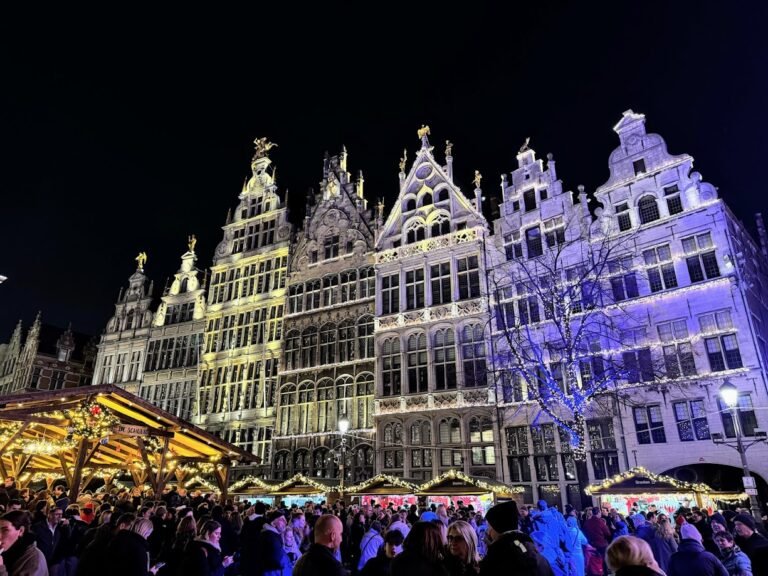
Brabo Fountain
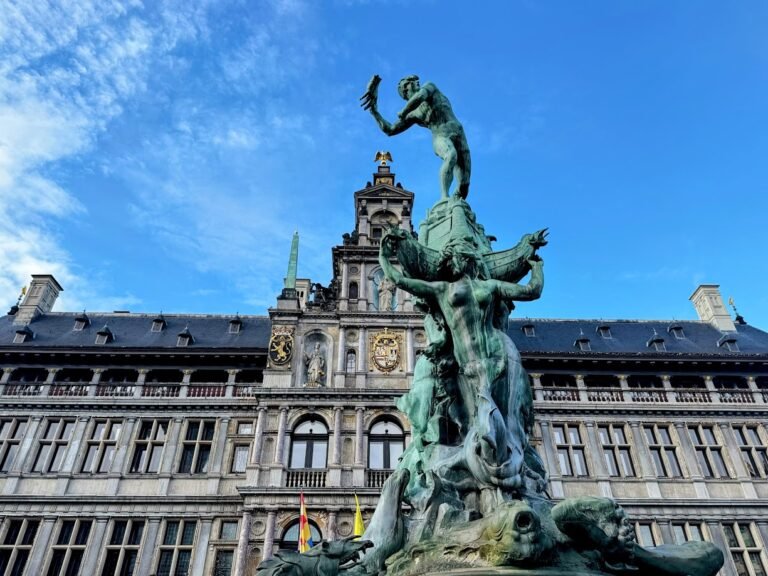
Right in the middle of Antwerp’s Grote Markt stands the famous Brabo Fountain. It tells the story of Brabo, the legendary hero who defeated a tyrannical giant, cut off his hand, and threw it into the river; a tale that’s supposed to explain how Antwerp got its name. In Dutch, Hand Werpen literally means “throwing of hands,” which eventually became Antwerp. The fountain makes a fantastic centerpiece for the square and is perfect for snapping photos from every angle.
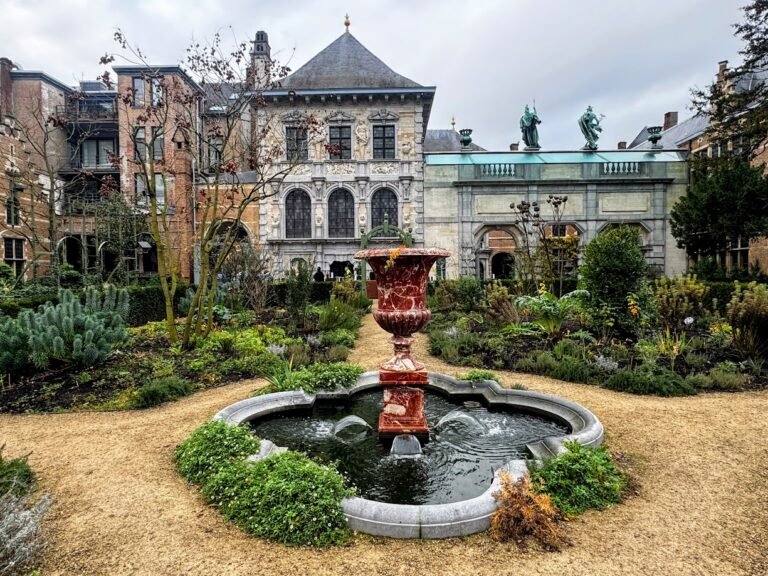
Rubens House
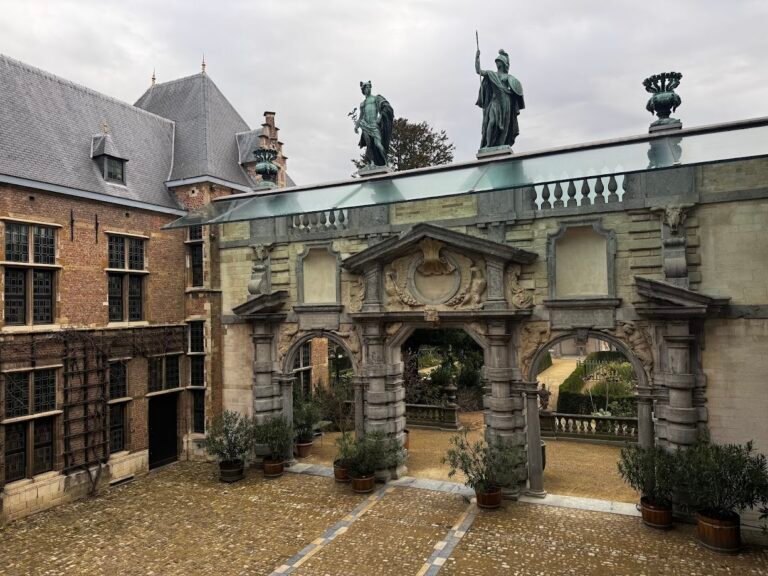
Belgian native and renowned Baroque artist Peter Paul Rubens lived in Antwerp, and his former home and studio has now been transformed into a museum. You can normally explore the rooms where he lived and worked, including his grand studio, and see a collection of his masterpieces alongside works by his students. However, the house is currently under renovation and won’t reopen until 2030.
Until then your ticket still gives you access to the beautiful Italian-designed gardens and the Rubens Experience, which includes a short film about the artist, interactive exhibits, informational displays, and a selection of artworks. Even without entering the house, it’s a great way to step into Rubens’ world and appreciate his legacy. Tickets for Rubens House are €12 per person, and I would budget about an hour for the visit.
Cathedral of our Lady (Antwerp Cathedral)
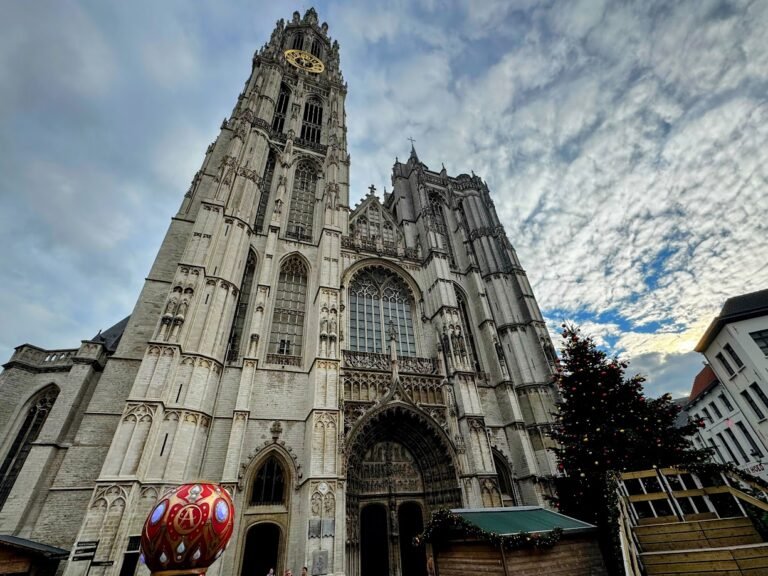
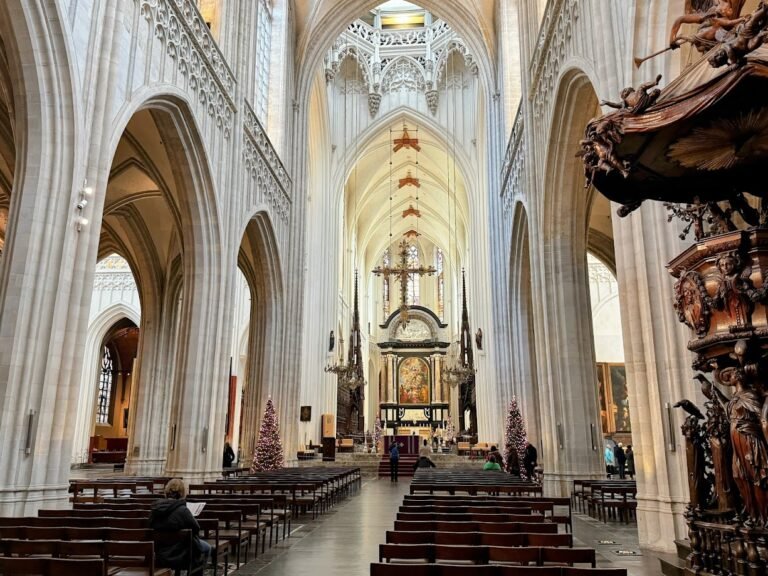
Dominating the city’s skyline is the Church of Our Lady, better known as Antwerp Cathedral. This magnificent Gothic masterpiece took several centuries to complete, starting in the 14th century. Standing in awe of the towering spire and intricate stonework, it’s easy to see why construction took so long. Inside, the cathedral is just as impressive, with the immense height of the nave and the ribbed vaults above. I’ve always been a fan of stained-glass windows, and there were plenty inside to be mesmerized by.
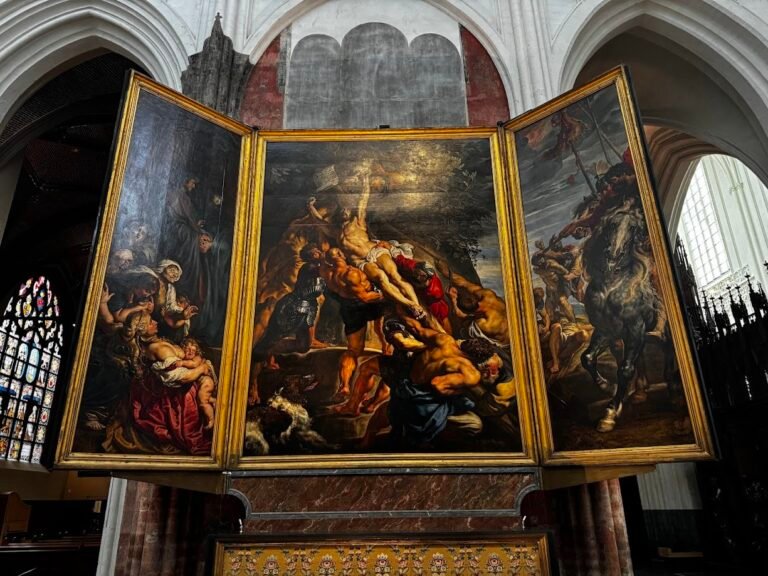
Beyond the architecture, the collection of Rubens paintings is one of the cathedral’s most striking features: you can marvel at The Elevation of the Cross, The Descent from the Cross, The Assumption of the Virgin Mary, and The Resurrection of Christ. The cathedral is truly amazing, and for a small entrance fee of €12, it’s completely worth a visit. Free guided tours are available in multiple languages; just check the website to plan your visit at the right time.
Nello and Patrasche
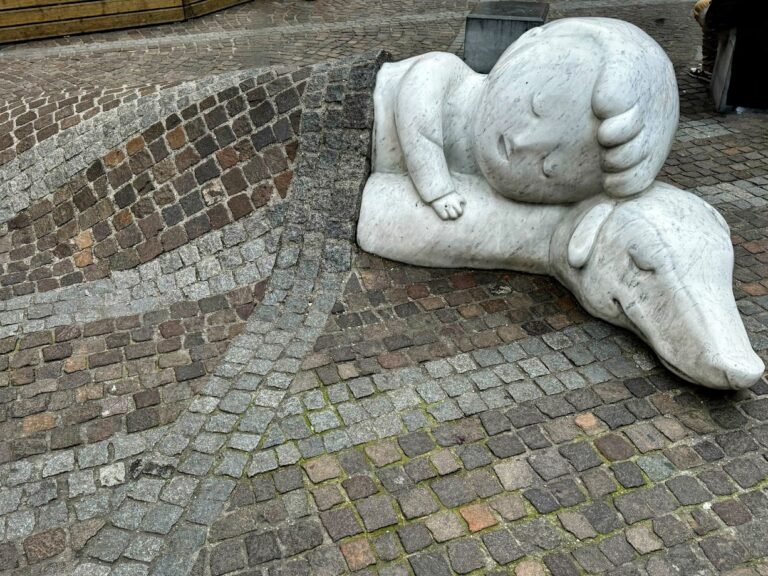
Be sure to look down as you walk in front of Antwerp Cathedral. On the ground is a statue of a little boy and his dog laying down covered in a cobblestone blanket. It’s of Nello and his dog Patrasche from the 19th-century novel, ‘A Dog of Flanders’. It’s a sweet but tragic story, of the friendship between the two. The boy is an orphan who dreams of becoming an artist just like Rubens, and sneaks into the cathedral every day with Patrasche to visit the paintings. On Christmas eve they sneak in, but are found outside the next morning frozen to death and curled up together. Despite being set in Antwerp the story actually gained more popularity abroad, especially in Japan.
Het Steen
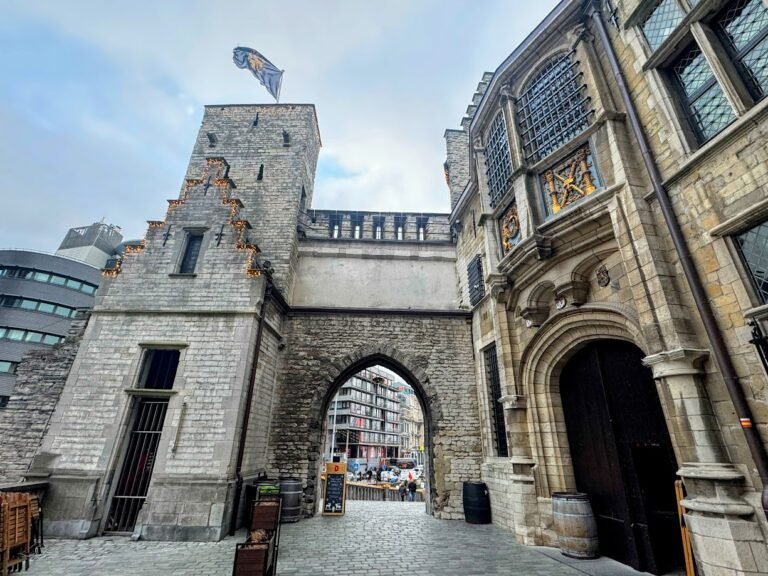
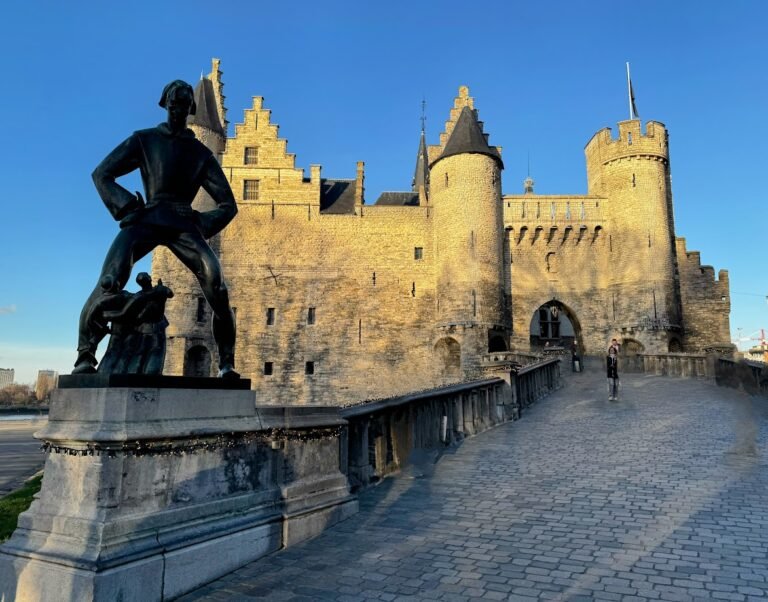
Widely considered the oldest standing building in Antwerp, is Het Steen (Old Stone). This medieval fortress has origins dating back to the 9th and 10th century and was later renovated by Charles V in the early 1500s. The fortress once formed part of the city’s defensive wall system and served as Antwerp’s main city gate on the Scheldt river.
Over the centuries, it’s had many roles, including a prison and a museum. Recently restored, it now functions as the city’s tourism hub and a gateway to Antwerp’s history, offering exhibitions and panoramic views of the river. There are some interesting interactive touch screen exhibits inside that walk you through the city’s evolution over time, as well as some interesting quirky facts you can find in the city.
Outside the fortress stands the famous statue of Lange Wapper, a folkloric giant, sometimes referred to as a goblin, known in Antwerp legends for his mischievous and sometimes frightening tricks on townspeople. The statue has become one of the site’s most photographed features.
Virgin Mary Statues
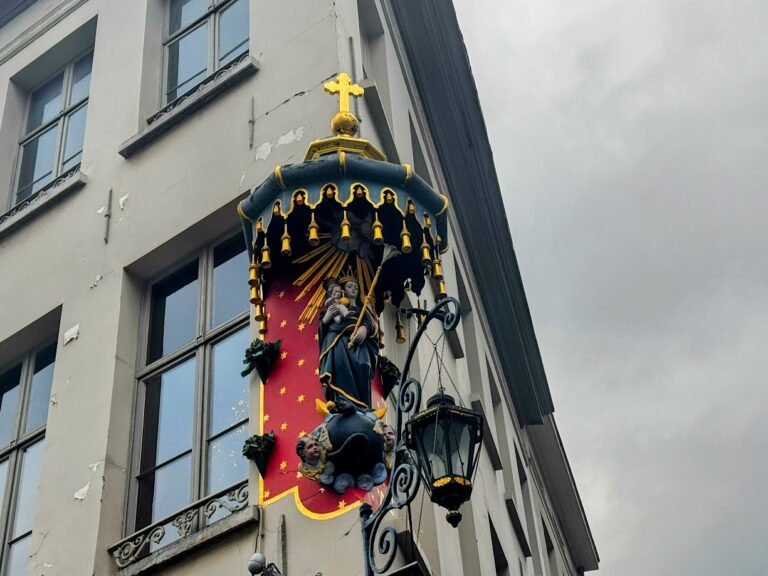
Throughout the old town there are over 150 of statues of the Virgin Mary and Child. Mary is the patron saint of Antwerp and statues of her were often placed in niches or canopies on house corners and façades. During and after the Counter-Reformation (16th–17th century), when Catholicism reasserted itself in Antwerp, these statues served as visible symbols of faith in streets and on buildings. Be sure to look up as you walk through the old town and see how many you can spot.
Museum aan de Stroom (MAS) - A Museum with a View!
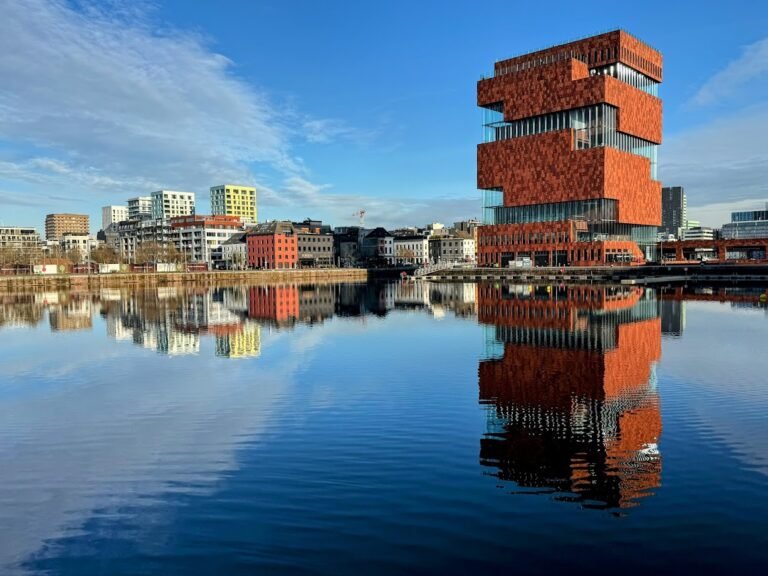
Opened in 2011, Museum aan de Stroom (MAS) is a major cultural history museum and the largest in the city. This striking modern building located in Antwerp’s former harbour area along the Scheldt River houses hundreds of thousands of objects and exhibitions that explore Antwerp’s history, its role as a port city, and its connections with the wider world through art, maritime history, ethnography and global cultures.
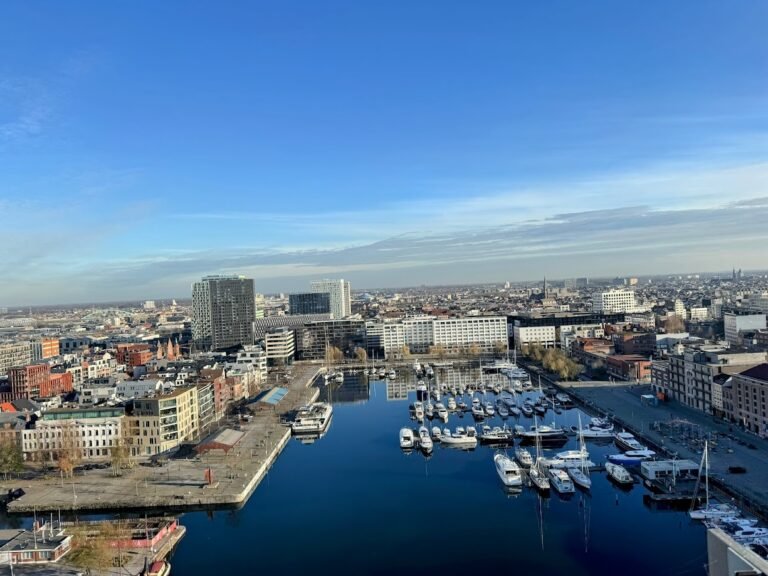
It’s definitely worth a visit, if only for the building itself. On a sunny day it provides some amazing reflections on the water. It’s also free to head up to the rooftop of the museum for some 360 panoramic views of the city.
Sint Paulus Antwerpen (Saint Pauls Church)
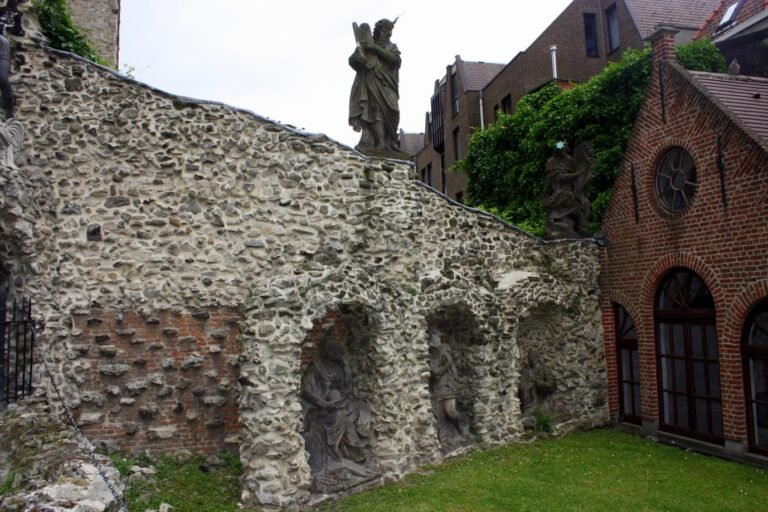
Sint Paulus Antwerpen is a historic Roman Catholic church in the city’s old sailors’ quarter. It dates from the 16th century and houses an exceptional collection of Baroque art and sculptures, including works by Antwerp masters like Peter Paul Rubens, Anthony van Dyck and Jacob Jordaens. The Calvary Garden outside has this dramatic collection of more than 60 life size statues and reliefs depicting the scenes of Christ’s Passion and Resurrection. The church is currently under renovation, which is expected to continue until 2028.
Beer, waffles and other recommendations!
On our first night we had dinner at De Pottekijker, which was this cozy authenic Belgian restaurant. It’s very popular, so you do need to book ahead. We enjoyed the fish pie and some cheese croquettes as a starter. Despite not being a meat eater, the meat dishes also looked really good!
Jazzcafé De Muze was a quirky bar near where we stayed. It feels quite small but there are actually three floors, a good selection of beers, and the bonus is live jazz music. While we didn’t eat here, the menu looked great and if had one more day I would have definitely come back to try the food.
Barries is a small cozy local bar located right by Groenplaats in the Old Town. We ordered some delicious Belgian beer, brewed in Antwerp and combined that with some “caféhapjes”, a snack of local cheese and spicy mustard. Great spot to stop in for a quick drink and friendly service.
Billie’s Beer is a craft beer bar that has a pretty extensive craft beer list. The bar is small, and seating is very limited, so you can’t be shy about asking another table to use any free seats available. The beer was excellent and I could definitely have stayed to try more, but given Belgian beers are super strong, we had to play the sensible card. Bonus was the vegetarian bitterballen which was delicious!
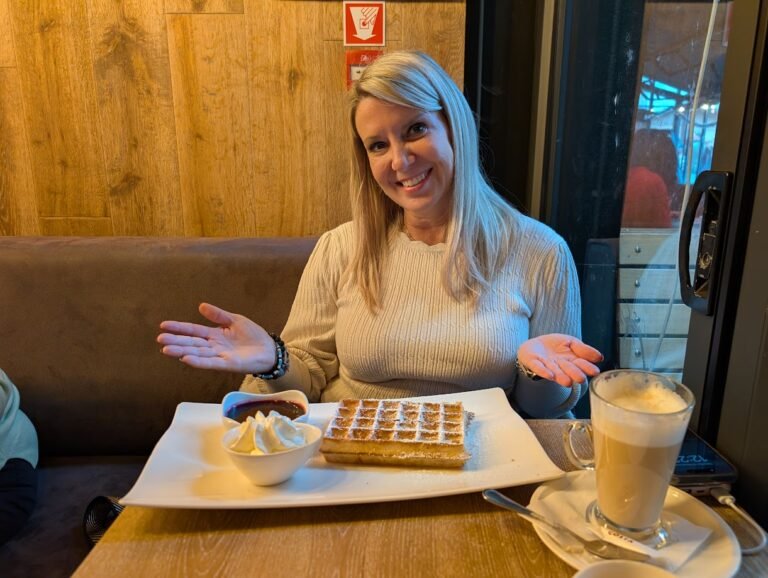
House of Waffles – No trip to Belgium is complete without having a waffle. Walking past this place and seeing the incredible looking waffles made it essential to get in on the action. The menu is varied with a good selection of sweet and savory waffle combinations. I went for the blueberries and cream with a Brussels waffle. I am making a waffle distinction here as I finally learned that there are two different kinds of waffles, Brussels waffles (Gaufres de Bruxelles) and Liège waffles (Gaufres de Liège). The former are rectangular, light, airy and crisp, while the latter are generally oval, made with brioche type dough and are dense, rich and chewy. I mean you can’t go wrong with either, but my choice is Brussels. Either way do yourself a favour and pop in here for a waffle or two.
Wrap up
We spent about 1.5 days in Antwerp, and that was definitely not long enough to see everything, but we did find a way to squeeze a lot in! Walking around the city and seeing the beautiful architecture, magnificent cathedrals and churches, sampling a few Belgian beers and taking in the festive Christmas markets was the perfect weekend.
With an additional day I would have loved to visit Zurenborg and explore the eclectic mix of Art Nouveau, Neo-Gothic, Neo-Renaissance, and Jugendstil styles of buildings. Also to head out to the port district and visit some of the local breweries. It’s not always a bad thing to leave a city wanting more though.