Sri Lanka’s bustling capital, Colombo is the island’s gateway city. It’s where you can find colonial architecture, colorful markets, and seaside temples sitting alongside sleek skyscrapers, luxury hotels, and trendy cafés. It was our final stop on our Sri Lanka adventure, with just one day to explore before heading back home. Despite this, there was so much we were able to squeeze in – from exploring the historic Fort area and the lively market in Pettah, to flying a kite while watching the sunset at Galle Face Green.
Colombo Fort
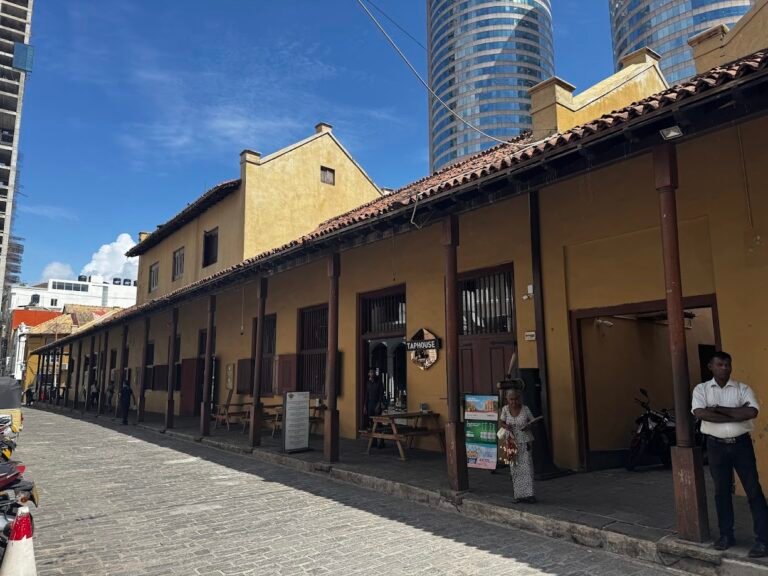
Colombo Fort was our first stop. A former fortified stronghold that was built by the Portuguese, expanded by the Dutch, and later transformed by the British. A few interesting sites and buildings still remain.
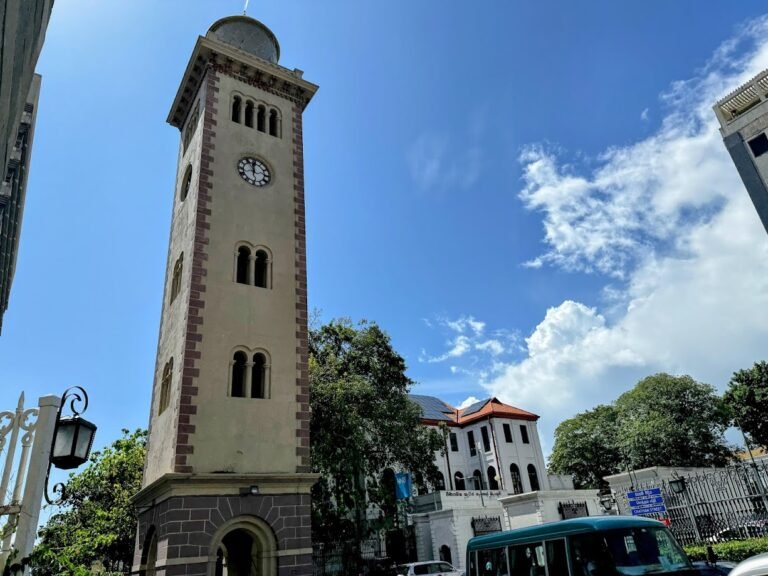
The Fort Clock Tower dates back to 1857 and was also used as a lighthouse and as a zero-mile marker for distances in the city. I personally found it interesting that the original clock mechanism was made by the famous clock maker Dent, who also made the clock mechanism for Big Ben in London.
The Dutch Hospital building, is one of the oldest buildings in Colombo. It has been restored and is now home to cafes, boutique stores and restaurants, including the renowned Ministry of Crab. It makes a nice midday lunch or drink spot, with many options to choose from.
If you’re an 80’s music fan you can stop in the cafe that was used in the Duran Duran video Hungry Like a Wolf. We popped in, but there is not much to see now, other than a standard cafe where you can buy pastries. Unless you just happen to walk by it, I would not recommend going out of your way for it.
We spent some more time just walking by some of the old colonial buildings like Cargills, which is a bright red, ornate 19th-century British colonial landmark, and the old post office. Given the location of the Fort area and its proximity to both Pettah Market and Galle Face Green, I would suggest spending some time just walking around and stopping somewhere for some local tea.
Pettah Market
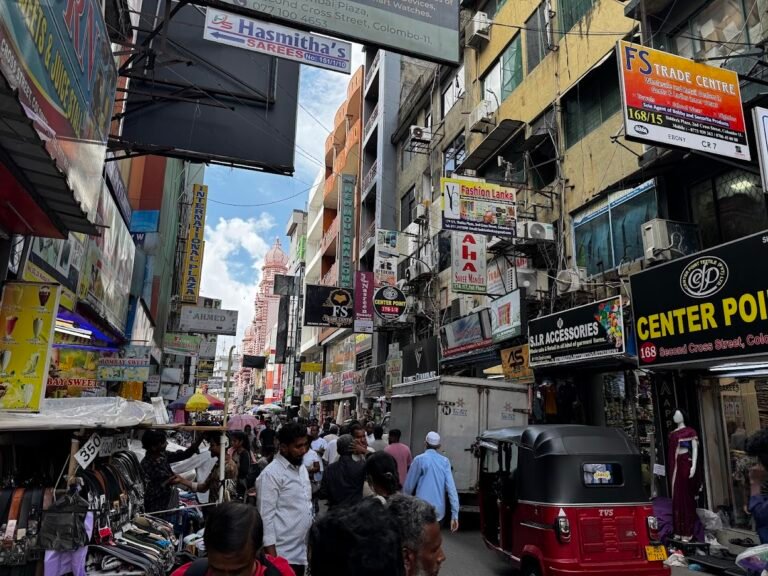
A short 10-minute walk from the Fort is Pettah Market. It’s a maze of narrow streets lined with stalls and shops that sell just about anything you can imagine. Visiting here felt like an authentic experience in one of Colombo’s liveliest, most chaotic, and most culturally rich areas. Busy and chaotic is an understatement actually, as walking through here is like playing a combination of real life frogger and Tetris, trying to weave your way through the mass of people, while avoiding getting hit by the tuk tuks and buses at the same time. As fun as that sounds it’s definitely worth a visit, even if just to see the Jami Ul-Alfar Mosque (“Red Mosque”).
Jami Ul-Alfar Mosque - “Red Mosque”
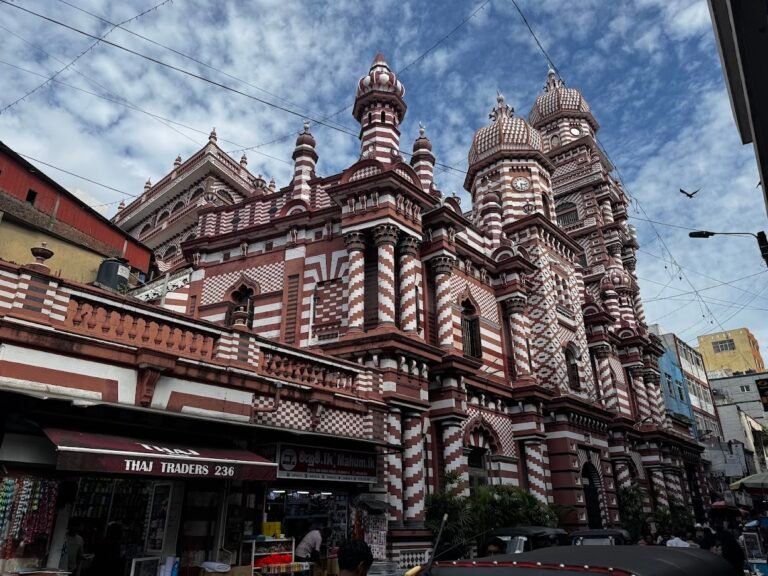
Standing out with its striking color pattern of alternating red and white stripes almost resembling a candy cane, is Jami Ul-Alfar Mosque (The Red Mosque). It’s one of the most photographed buildings in Sri Lanka, located at the intersection of Second Cross Street and Mosque Street. The mosque was built in 1908 in an architectural style that is a blend of Islamic, Indian, and colonial. You can visit the Mosque, provided you are dressed appropriately, but given how short on time we were, we just enjoyed seeing it from the outside.
Port City
After the chaos of Pettah Market, our next stop was Port City, a reclaimed waterfront development and Special Economic Zone (SEZ) next to Galle Face Green. At the time we visited, only a few shops and restaurants were open in this new area, with construction and development still underway. We strolled across the Port City Footbridge, a pedestrian and bicycle bridge offering stunning views of the Colombo skyline.
A 25-minute walk would have taken us to the newly built Beach Park, but with limited time and sunset at Galle Face Green calling, we decided to relax at a nearby restaurant instead. We discovered Chill, the new sister venue, to the famous Cafe Chill in Ella. Opened in March 2025, it’s a spacious, beautifully designed spot with excellent service. We enjoyed a drink and imagined how fun it would be at night with DJs and live music. Port City is definitely an area to keep an eye on over the next few years!
Galle Face Green
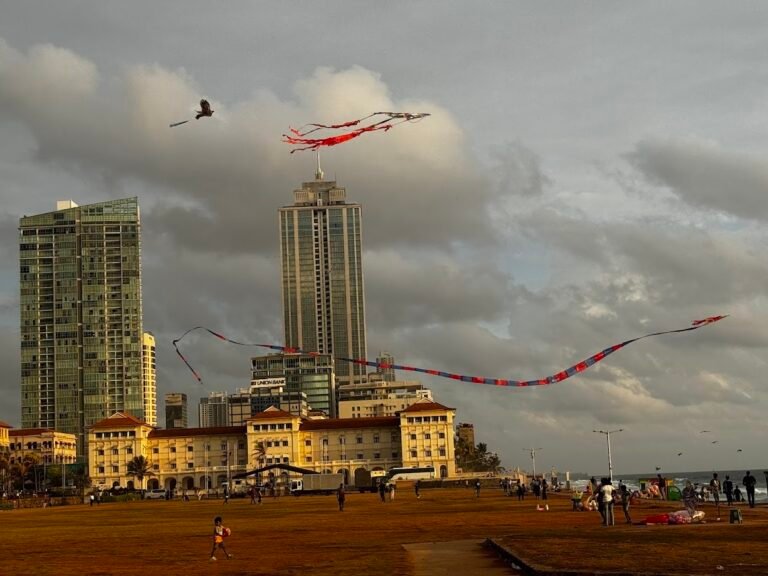
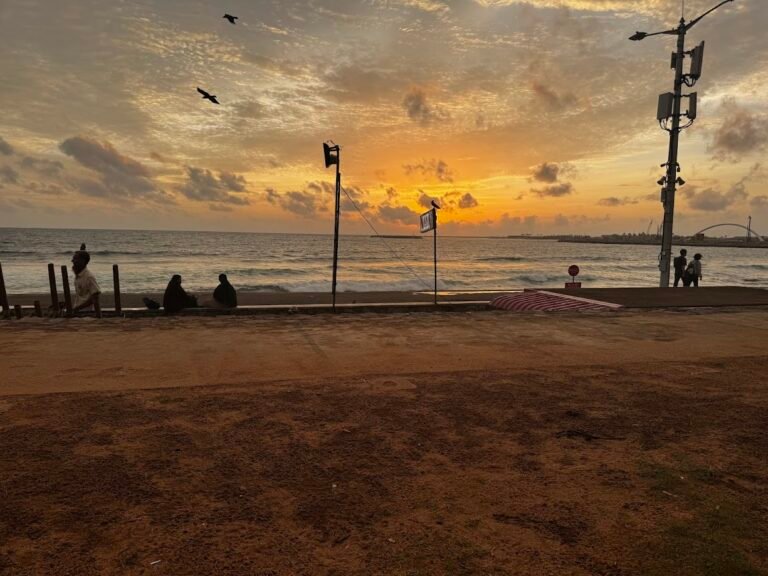
Galle Face Green is one of Colombo’s largest urban open spaces. Originally a promenade for Dutch colonial rulers in the 18th century and later expanded by the British, it was used for both recreation and ceremonial events. Today, the grassy oceanfront is alive with street vendors, cricket games, kite flying, and people simply relaxing in this beautiful, breezy space by the sea.
When the wind picked up during our visit, we couldn’t resist trying a kite. For 500 LKR, we bought one with a long tail from a local vendor and had a blast getting it soaring high. Watching the kite dance against the backdrop of modern skyscrapers was not only beautiful and great fun but also brought back some childhood memories too. And the sunset here was incredible – a truly must-see when visiting Colombo.
Lotus Tower
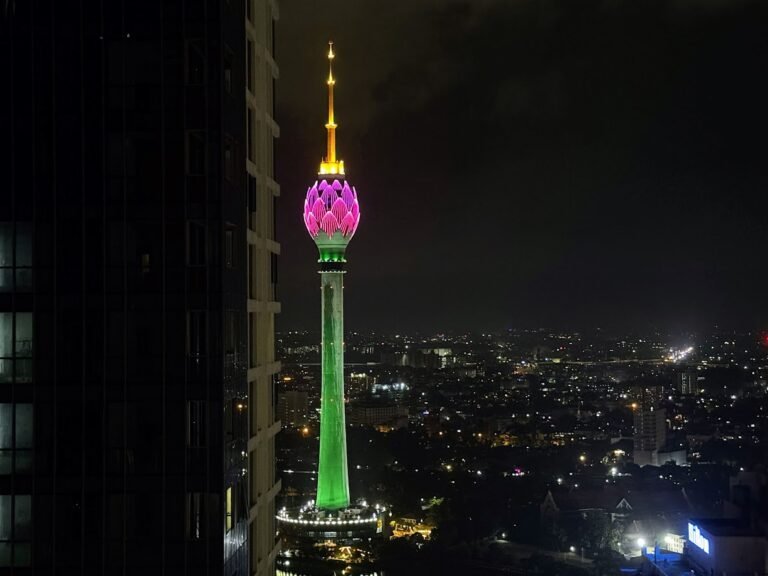
Inspired by the lotus flower, the Lotus Tower adds a splash of color to Colombo’s skyline. Perched on Beira Lake, this 350‑meter tower is visible from across the city and holds the title of the tallest free-standing tower in South Asia. At night, its LED-lit petals shift through vivid pinks, purples, greens, and turquoise, creating a magical spectacle. I wish I’d had more time to visit the 360° observation deck and enjoy a meal at the revolving restaurant – alas I’ll just have to make a return visit to this lively city.
Gangaramaya Temple
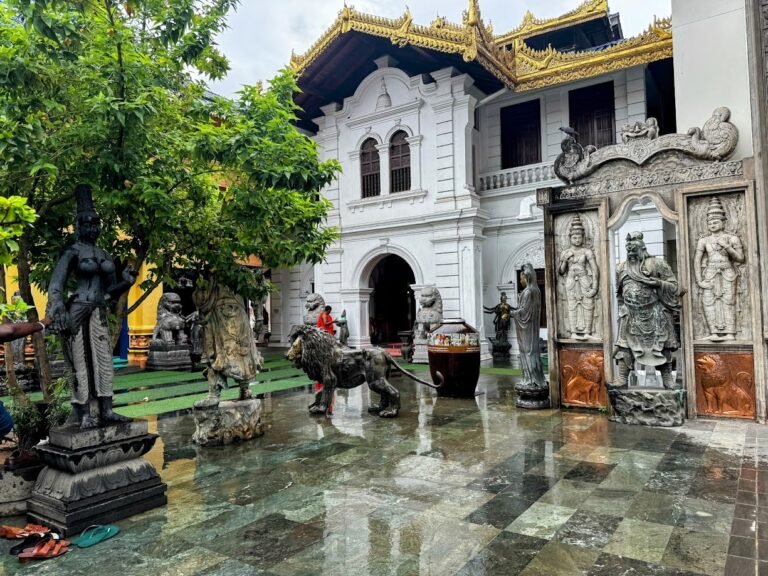
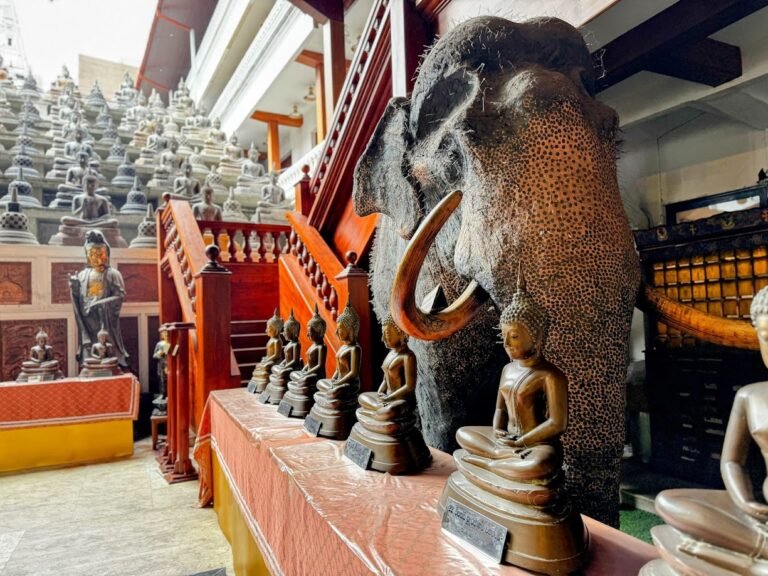
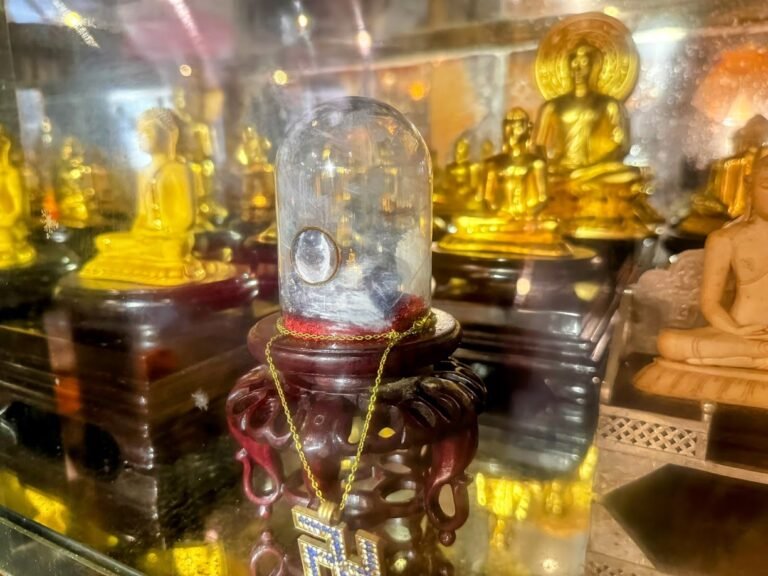
The Gangaramaya Temple is home to Sri Lanka’s tiniest Buddha statue – a claim we couldn’t resist checking out ourselves. The little figure is housed in a small case near the entrance, with a magnifying lens barely the size of a fingertip. Peeking inside at the right angle reveals the teeny statue, but scratches on both the magnifier and the container made it even trickier to see. While the tiny Buddha is fun to find, what really caught my attention were the thousands of other Buddha artifacts on display. It felt like stepping into a treasure trove, or a Buddhist antique shop, where anything and everything Buddha-related could be found. There’s a small entrance fee, and visitors are asked to cover shoulders and knees and remove shoes before entering.
Seema Malaka Temple
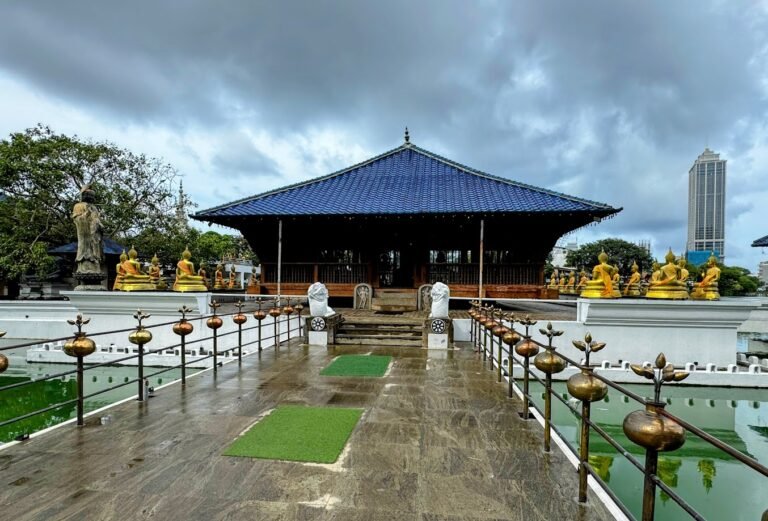
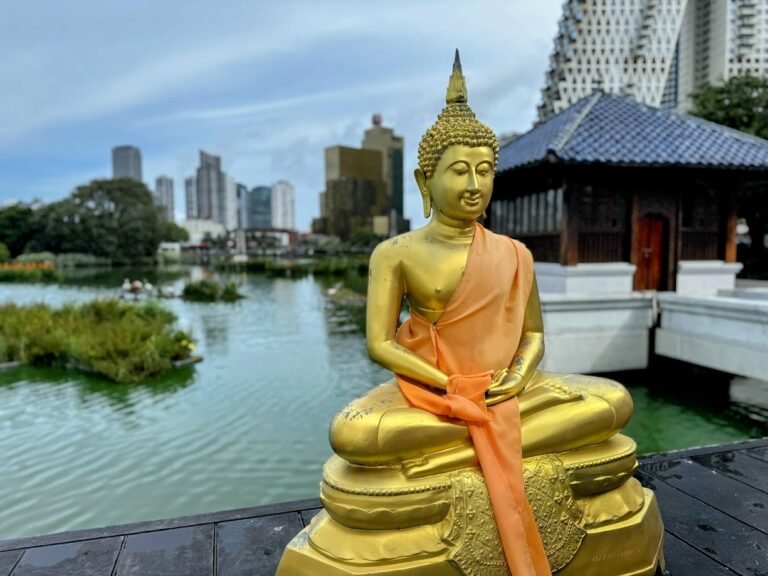
Entrance tickets for Gangaramaya Temple also includes admission to Seema Malaka Temple. Sitting peacefully on Beira Lake, this temple immediately feels like a calm escape from the hustle of Colombo. Floating on the water, it’s connected by wooden walkways and dotted with beautiful gold Buddha statues and colorful shrines. The reflections on the lake and the serene atmosphere make it one of those places where you just want to pause, take it all in, and soak up the tranquility – oh and take a few photos of course!
Itinerary
Day 1
- Late morning – arrive from Unawatuna to hotel
- Afternoon – Colombo Fort, Pettah Market, Red Mosque, Port City
- Late afternoon and dinner – Galle Face Green
Day 2
- Morning – Gangaramaya Temple and Seema Malaka Temple
- Midday – leave for airport
Final thoughts
A short 24 hours in Colombo wasn’t nearly enough, and we left knowing there was so much more to explore. That said, we still managed to get a glimpse of this colorful and exciting city, and I’m glad we made a stop here before leaving Sri Lanka. My visit exceeded all expectations, and I definitely recommend spending at least a day in Colombo as part of your Sri Lankan adventure.